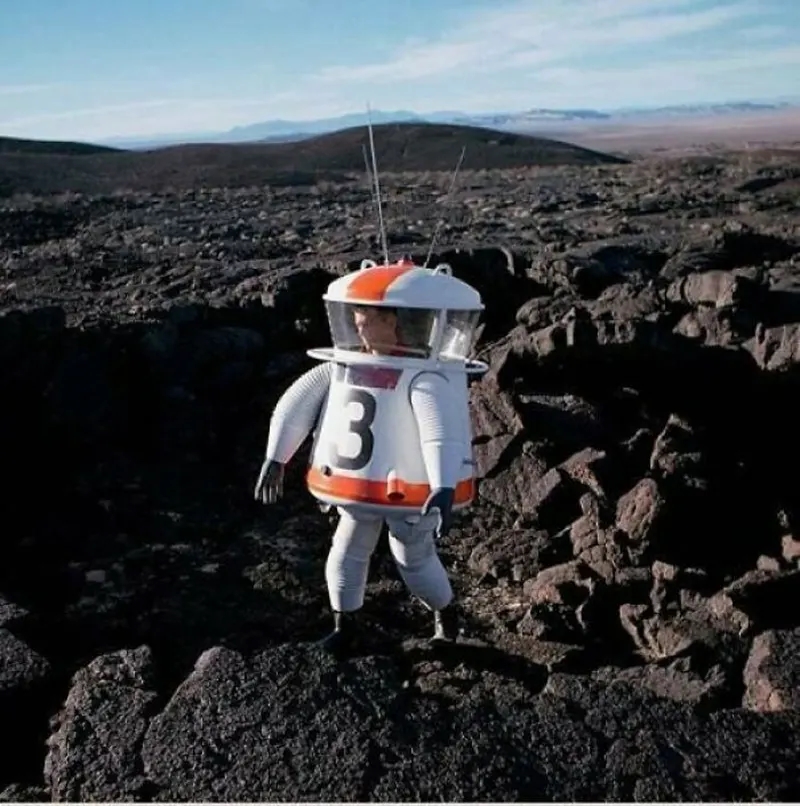
Few artifacts from the early Space Race feel as delightfully odd as Grumman’s proposed “space suit” for NASA in 1962, a design that looks part deep-sea diving gear, part retro-futurist costume. In the photo, a lone figure stands on jagged, dark volcanic rock, the bulky white torso section and oversized helmet giving the wearer a toy-like silhouette against a wide, empty horizon. The bold markings and bright accents read like a prototype meant to be noticed—half engineering pitch, half showroom spectacle.
Up close, the suit’s most striking feature is its rigid, boxy body paired with ribbed, flexible limbs, suggesting an attempt to solve mobility while keeping a pressurized core stable. Antennas sprout from the helmet area, and the large face window hints at a time when visibility and simplicity could outweigh the sleek, close-fitting look we now associate with Apollo-era EVA gear. Whatever its technical merits, the overall effect is unmistakable: a walking capsule designed to sell an idea of space travel as much as a workable solution.
Seen today, this historical photo lands somewhere between serious aerospace development and charming Cold War imagination, and that tension is exactly what makes it so shareable. It’s a reminder that the path to NASA’s eventual spacesuit standards was crowded with competing concepts, corporate proposals, and dead-end designs that still tell a story about ambition and experimentation. For readers interested in space history, vintage NASA proposals, and Grumman Aircraft Corp’s role in the era, this image captures the creative risks—and occasional visual weirdness—behind humanity’s push beyond Earth.