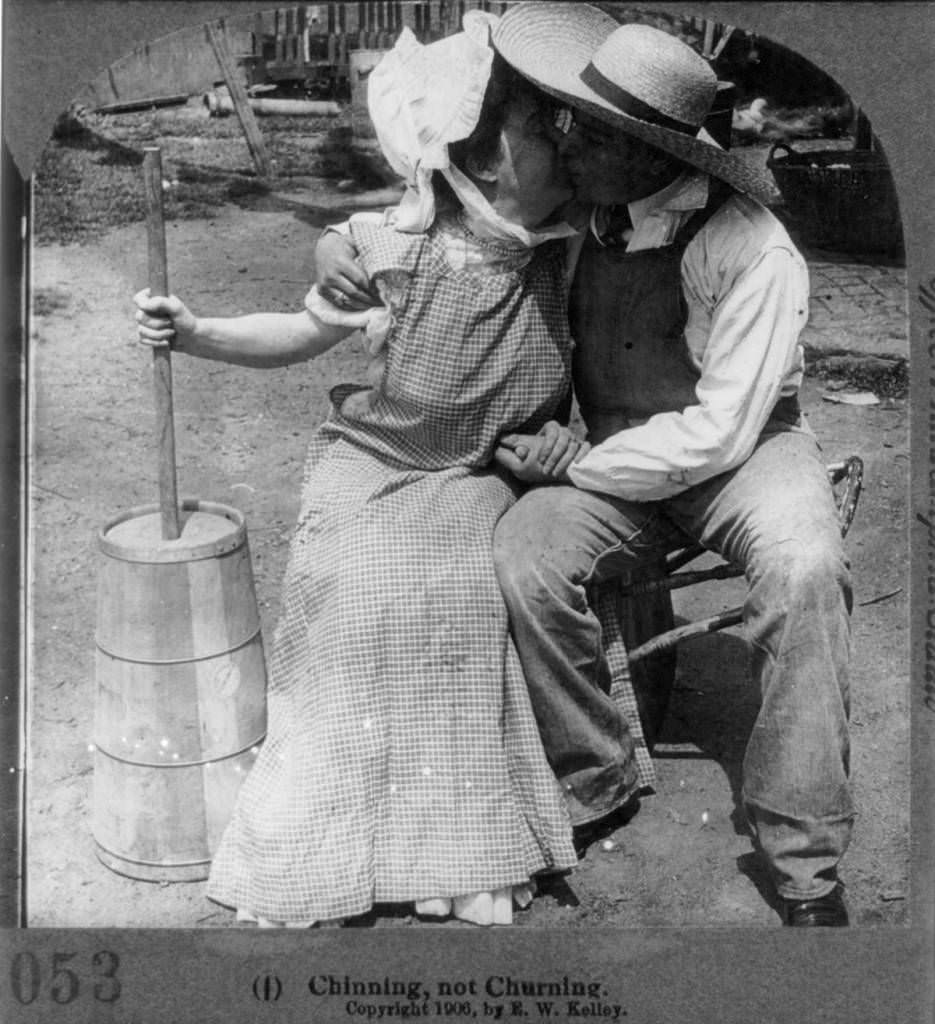
A butter churn sits ready at the couple’s side, its wooden dasher planted upright as if work is about to begin. Instead, the moment tilts toward romance: the woman in a gingham dress and bonnet leans in while the man, in a broad-brimmed straw hat and vest, steals a kiss on a rough outdoor seat. Even without a visible kitchen or barn interior, the simple yard setting and farm tools in the background suggest everyday rural life—paused, playfully, for something sweeter than chores.
“Chinning, Not Churning (1906)” winks at the viewer with a pun that would have landed instantly in its own time, when butter-making was familiar labor and courtship humor sold postcards by the stack. The staged spontaneity is part of the charm: the churn is front and center, yet the “task” has been cheerfully abandoned, turning domestic work into a punchline. It’s a small scene, but it speaks volumes about early 20th-century visual culture—sentimental, mischievous, and designed to be shared.
Look closely at the details and you can almost hear the era’s rhythms: sturdy work clothes, practical footwear, and the grounded posture of people used to physical routines. The comedy isn’t mean-spirited; it’s affectionate, portraying love as an interruption worth welcoming. For anyone searching for a 1906 postcard-style photograph, rural Americana, or vintage courtship humor, this image delivers a memorable snapshot of how everyday labor and flirtation could coexist in the popular imagination.