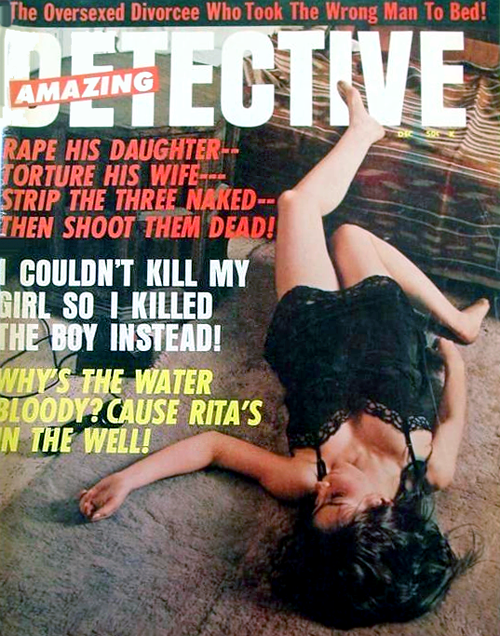
Lurid pulp typography shouts across the cover of *Amazing Detective*, promising scandal, violence, and a mystery wrapped in tabloid-style certainty. The title line—“Why’s the Water Bloody? Cause Rita’s in The Well!”—leans hard into dark humor, using a sing-song punchline to sell dread as entertainment. Even at a glance, the big block letters and stacked exclamations telegraph the era’s appetite for sensational crime stories packaged as quick, irresistible reads.
Across the lower half, a posed model lies sprawled on the ground in a way that’s meant to suggest danger, vulnerability, and aftermath rather than documentary truth. The staging and framing are doing the work: dramatic body angle, exposed skin, and a gritty surface under her—classic visual shorthand for “crime scene,” but filtered through the glossy exaggeration of mid-century magazine art. It’s an unsettling reminder of how often women’s bodies were used as props in the pulp marketplace to heighten stakes and snag attention at the newsstand.
For collectors and cultural historians, pieces like this offer more than shock value; they’re artifacts of how popular media once blended detective fiction, moral panic, and cheeky one-liners into a single sales pitch. If you’re researching vintage crime magazine covers, pulp detective culture, or the history of sensational headlines, this image encapsulates the formula in one loud burst. The result is both funny in its brazen absurdity and revealing in what it tells us about the entertainment economy that produced it.