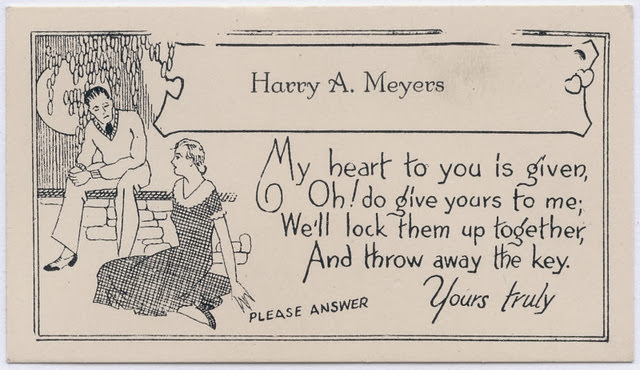
Harry A. Meyers’ name sits at the top of this whimsical acquaintance card, framing a flirtatious little scene in ink. At left, a well-dressed man perches on a low wall or step, while a woman in a patterned dress sits nearby, her pose relaxed but attentive. The simple linework, decorative border, and open space for text hint at a mass-produced novelty meant to be passed hand-to-hand, turning social nerves into a shared joke.
“My heart to you is given, Oh! do give yours to me; We’ll lock them up together, And throw away the key.” The rhyme is deliberately over-the-top, using playful exaggeration to make a bold proposal feel safely comedic, and the “Yours truly” signature line mimics a formal letter even as it winks at romance. Tucked beneath the verse, the small but insistent “PLEASE ANSWER” reveals the real purpose of these humorous cards: to invite a response, spark conversation, and create an excuse for continued contact.
In the 19th century, etiquette could make introductions awkward, and printed humor offered a socially acceptable shortcut to connection. Cards like this—part pun, part poem, part invitation—functioned as early “icebreakers,” blending courtship, comedy, and a bit of theatrical daring in a pocket-sized format. For anyone exploring Victorian-era humor, novelty stationery, and the history of flirting in print, this piece is a charming reminder that playful banter has long been a tried-and-true way to say hello.