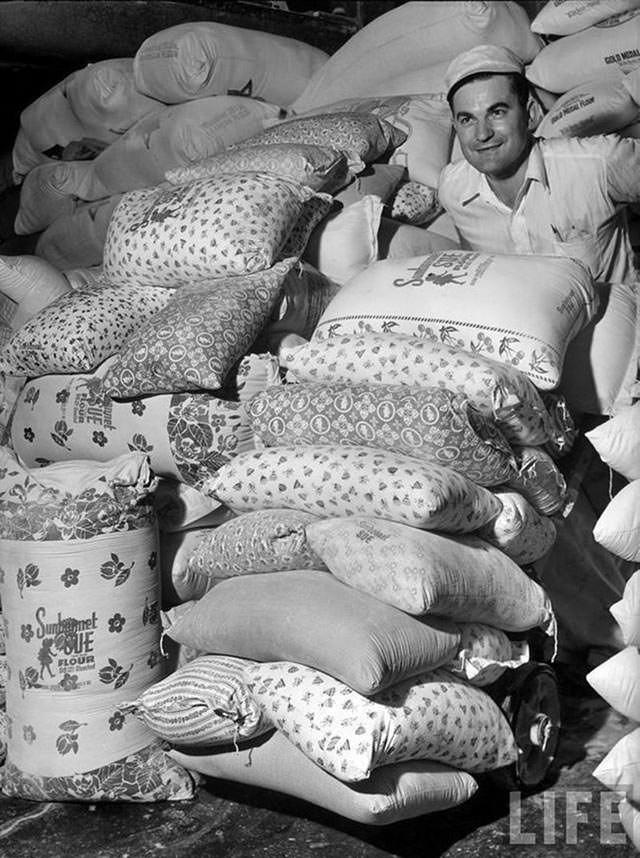
A warehouse floor disappears beneath a soft-looking mountain of flour sacks, some plain and some bursting with cheerful prints, while a mill worker crouches beside the stack with a knowing smile. The camera lingers on the details that mattered in 1939: sturdy cloth, tightly stitched seams, and patterns chosen not just to sell flour, but to offer something that could be reused long after the baking was done.
In hard times, thrift wasn’t a quaint hobby—it was a household strategy, especially for mothers trying to keep children clothed with whatever material could be found. Flour sacks became fabric: washed, unpicked, and cut into shirts, dresses, aprons, and quilts, turning an everyday purchase into a second chance at utility. Once mills realized what was happening, some leaned into it by printing flowered designs on sack cloth, a small but telling adaptation to the realities of poverty and resourcefulness.
What makes this historical photo so memorable is the collision of industry and home life in a single frame: marketing meets making-do, and commerce quietly acknowledges need. Those patterned sacks hint at the unseen labor that followed—scrubbing out ink, smoothing wrinkles, and sewing late into the night—so a child could wear something bright. For anyone interested in Great Depression-era material culture, feed sack fashion, and the history of American thrift, the scene offers a vivid reminder that “packaging” sometimes became a lifeline.