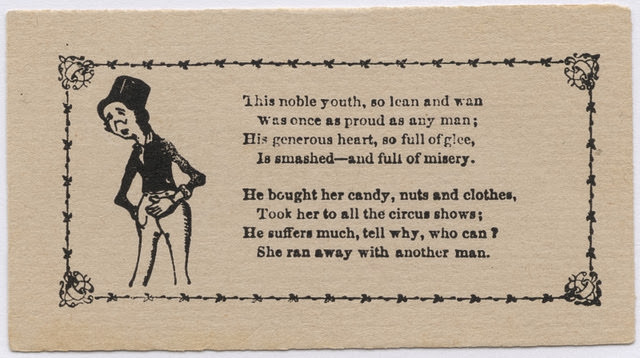
Wry verse and a simple ink drawing do most of the work on this 19th-century “acquaintance card,” a pocket-sized conversation starter meant to be handed over with a smile. A lanky, top-hatted gentleman slumps at the left edge of the design, his posture telegraphing heartbreak before you even read the rhyme. The decorative border frames the joke like a miniature stage, turning personal misfortune into something shareable and, importantly, socially safe.
The printed poem leans into melodrama—once “proud as any man,” now “smashed” and miserable—then lands its punchline with a blunt explanation: “She ran away with another man.” That mix of courtship, consumer temptation (candy, nuts, clothes), and public amusements (circus shows) hints at the everyday textures of urban leisure and dating rituals of the era. Humor here isn’t merely entertainment; it’s a coded way to admit vulnerability, test a stranger’s reaction, and invite a reply.
Collectors and social historians prize pieces like this because they reveal how people used printed ephemera to break the ice long before dating apps and direct messages. Searchable terms like “Victorian humor,” “acquaintance cards,” “comic verse,” and “19th-century ephemera” barely capture the charm of holding a small, disposable object that once did real social work. In a few lines and a single comic figure, the card preserves a timeless truth: laughing together can be the quickest path to getting acquainted.