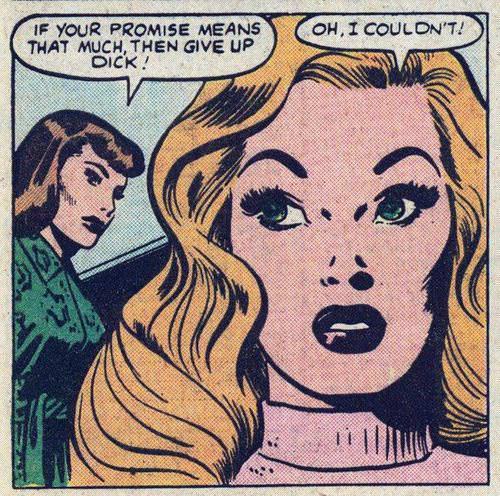
A single comic-panel close-up delivers the whole punchline: a wide‑eyed blonde woman in classic mid‑century pop‑art style, heavy lashes and parted lips, while a second woman in a green dress turns away in the background. The speech bubbles do the mischief—“If your promise means that much, then give up Dick!” followed by the stunned reply, “Oh, I couldn’t!”—turning what could be an innocent snippet of dialogue into something far cheekier at first glance.
Old-school ads, comics, and catalog art often leaned on neat little misunderstandings like this, where everyday wording collides with slang or a conveniently ambiguous name. The bright halftone colors, bold outlines, and soap‑opera facial expressions heighten the melodrama, making the double meaning land even harder, especially for modern readers who scan for innuendo as readily as they do for nostalgia.
Innocent or not, the panel is a perfect example of why vintage print ephemera keeps going viral: it’s simultaneously a time capsule of mainstream visual language and an accidental comedy routine. Whether you’re here for the retro aesthetics, the suggestive wordplay, or the cultural whiplash of yesterday’s “wholesome” entertainment, this post dives into how these surprising double meanings get smuggled into plain sight—and why they still make us laugh.