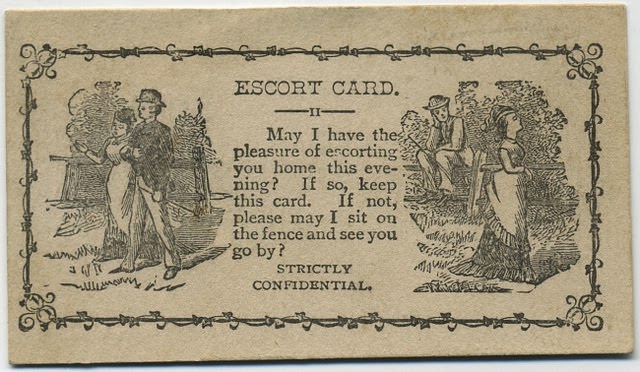
Wry courtship etiquette sits at the heart of this 19th-century “Escort Card,” a pocket-sized joke that turned a shy request into something you could hand over with a grin. Framed by a decorative border and flanked by small illustrations of a couple in conversation, the card stages romance as a playful negotiation—half polite, half teasing—made for social settings where a direct approach might feel too bold.
The printed message does the real work: it asks for “the pleasure of escorting you home this evening,” then offers a comic fallback if the answer is no, promising to “sit on the fence and see you ‘go by.’” That punchline reveals how humorous acquaintance cards functioned as a social lubricant, letting people flirt while keeping their dignity intact. Even the line “STRICTLY CONFIDENTIAL” adds another wink, implying a private understanding between giver and recipient while everyone nearby could guess what was happening.
Beyond the laugh, pieces like this are a reminder that Victorian-era humor was often practical, designed for real interactions at dances, gatherings, and evenings out. For readers interested in 19th-century ephemera, courting customs, and the history of dating, the Escort Card offers a compact lesson in how printed novelty items helped people break the ice—one carefully worded joke at a time.