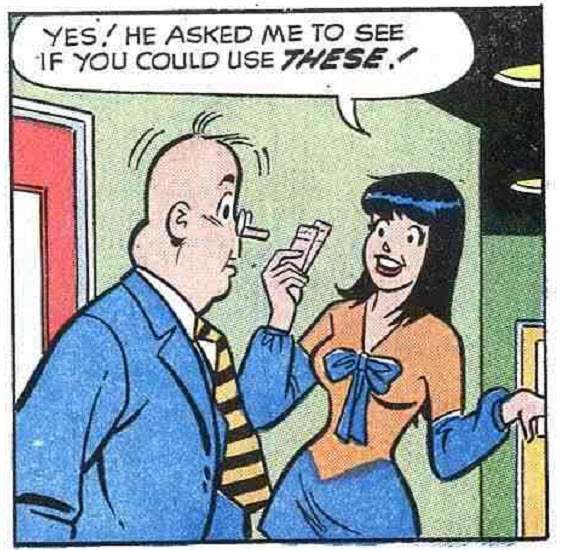
A startled office moment plays out in bright, mid-century comic colors: a balding, tie-and-suit boss typeset in classic Archie-style linework holds up a small stack of rectangular items while a smiling young woman in a bow-front blouse gestures casually from the doorway. The speech balloon—“YES! HE ASKED ME TO SEE IF YOU COULD USE THESE.”—hangs in the air like a punchline waiting to land, leaning on innuendo rather than explicit detail. It’s the kind of cheeky misunderstanding gag that feels tame today, yet it hints at how even “funny” mainstream comics learned to flirt with adult humor through suggestion and timing.
By the 1970s, shifting social attitudes and pop culture loosened the grip on squeaky-clean storytelling, and publishers increasingly tested the boundaries of what could be implied on the page. Panels like this used workplace setups, confident body language, and double-meaning dialogue to “turn up the heat” without abandoning the familiar, friendly house style that made Archie Comics instantly recognizable. The result is a fascinating blend of innocence and knowingness—romance and ribaldry sharing the same neat outlines and candy-colored palette.
For readers and collectors, this kind of archival comic art offers more than a quick laugh; it’s a snapshot of how humor, gender roles, and censorship-era restraint evolved in mainstream American comics. The exaggerated expressions, the carefully staged props, and the loaded phrasing all point to a period when creators could get away with more—so long as the punchline remained technically clean. If you’re digging into the lustier pages of 1970s funny comics, this panel is a perfect reminder that the era’s heat often came from what was left unsaid.