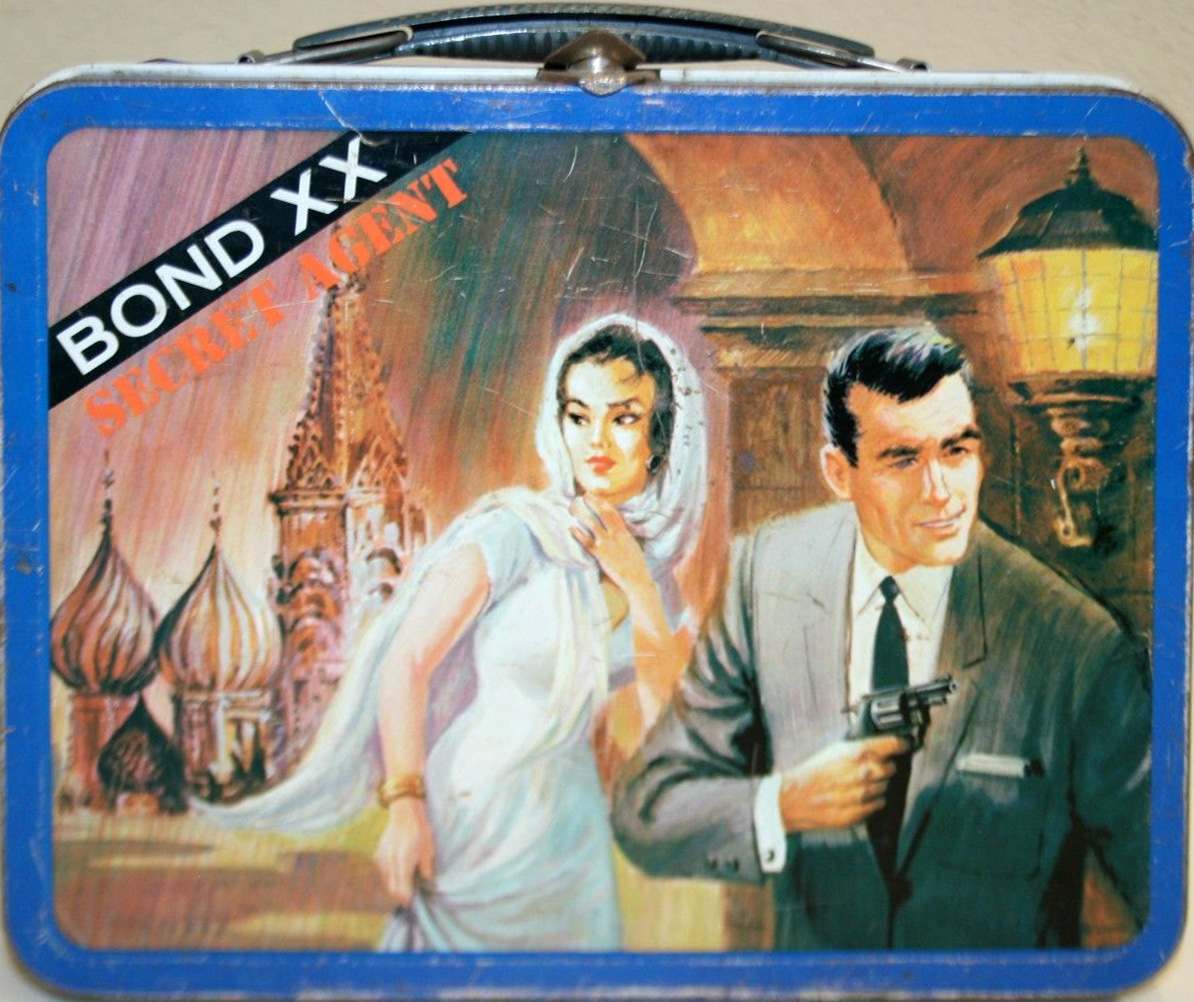
A scuffed metal lunchbox could broadcast a kid’s entire identity before the first bell ever rang, and the bold “BOND XX” artwork on this one makes the point in a single glance. The painted scene—suave spy, tense getaway, and a swirl of exotic backdrops—turns an everyday container into a pocket-sized movie poster, the kind of pop-culture badge you carried down the hallway like a statement. Even the worn edges and scratched surface feel like a record of daily rituals: desks, bus seats, and cafeteria floors.
In the 1970s, licensed metal lunchboxes weren’t just practical; they were social currency, a mix of aspiration and anxiety in tin and paint. Show up with the “right” character and you might ride a small wave of admiration; show up with something uncool, and the teasing could be relentless—schoolyard status reduced to what was printed on your lunch pail. That tension is what makes these objects so nostalgic and so funny in retrospect: childhood hierarchies built around cartoons, heroes, and whatever was trending on screens at home.
Collectors now chase the same details kids once obsessed over, from the bright borders to the dramatic illustration and bold title text, because these lunchboxes are time capsules of consumer culture and childhood pride. This photo highlights how a simple lunch container could double as armor, advertisement, and conversation starter—sometimes all in the same awkward day. If you remember the clatter of metal hinges and the hope that your lunchbox would earn respect instead of ridicule, you already know why the 1970s lunchbox era still resonates.