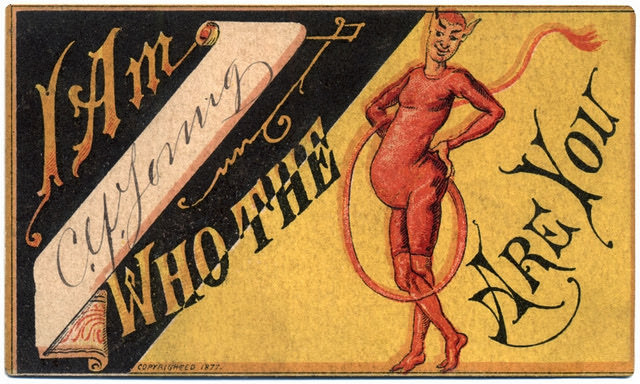
Bold lettering sprawls across a small, brightly colored card, where “I Am” and “Who?” clash in playful typography before the message swings to a cheeky “Are You.” The layout leans into spectacle: sweeping flourishes, high contrast bands of color, and an overall design that reads almost like a miniature poster meant to be flashed, not merely read. Even without knowing the sender or recipient, the intent is clear—this is nineteenth-century humor engineered to spark a reaction in an instant.
On the right, a mischievous devil figure poses with hands on hips, its tail curling behind in a confident loop that echoes the card’s scrolling lines. The character isn’t subtle; it’s a theatrical wink at flirtation and teasing, turning a simple introduction into a tiny stage performance. Together, the caricature and the taunting question create the perfect social “icebreaker,” the kind of prop someone might use to dodge awkwardness and invite banter.
Humorous acquaintance cards like this sat at the crossroads of print culture, courtship, and everyday entertainment, offering a scripted way to be bold without being too serious. For collectors and anyone interested in Victorian-era social rituals, the piece is a reminder that witty one-liners and visual jokes long predate modern memes—only the medium has changed. If you’re exploring the art of breaking the ice in the 19th century, this playful design shows how a pocket-sized card could carry outsized personality.