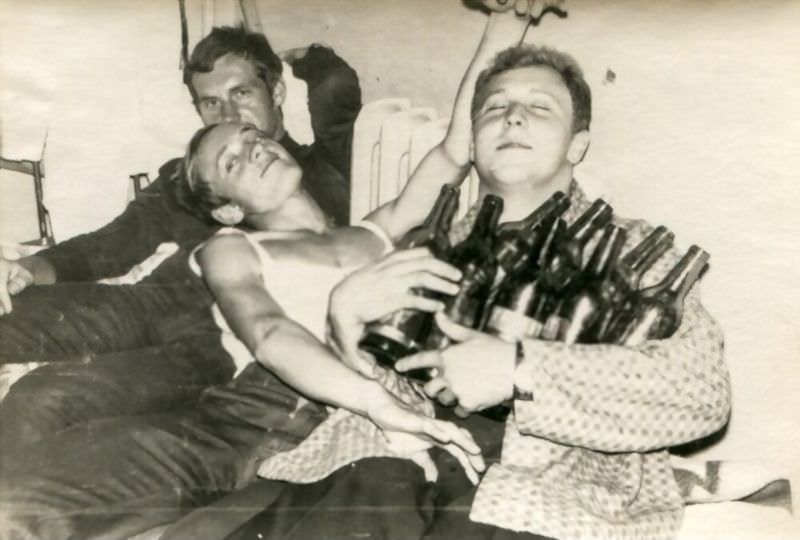
Cramped into what looks like a modest Moscow room, three young men sprawl across a bed in a moment that’s equal parts camaraderie and chaos. One leans back with eyes shut in blissful surrender, while another slumps heavily against him, the posture of someone who has laughed too hard for too long. In the foreground, a friend clutches an absurd armful of glass bottles like trophies from a night that got away from them.
The humor here isn’t staged or polished; it’s the everyday, slightly reckless comedy of youth, caught mid-collapse. Wrinkled shirts, loosened bodies, and the casual clutter of the space suggest a private after-hours scene rather than a public celebration. Even without knowing the exact year, the photo carries that familiar social ritual—friends gathered close, the room warm, the jokes louder, and the evening drifting into morning.
As a historical snapshot, “Drunk young men in Moscow” offers a small, human counterpoint to grand narratives about the city and its eras. It hints at how ordinary people made their own entertainment, how friendships filled tight quarters, and how nightlife could be remembered not through landmarks but through laughter and fatigue. For anyone browsing vintage Moscow photography or candid Soviet-era life scenes, this image delivers a vivid, relatable slice of lived experience.