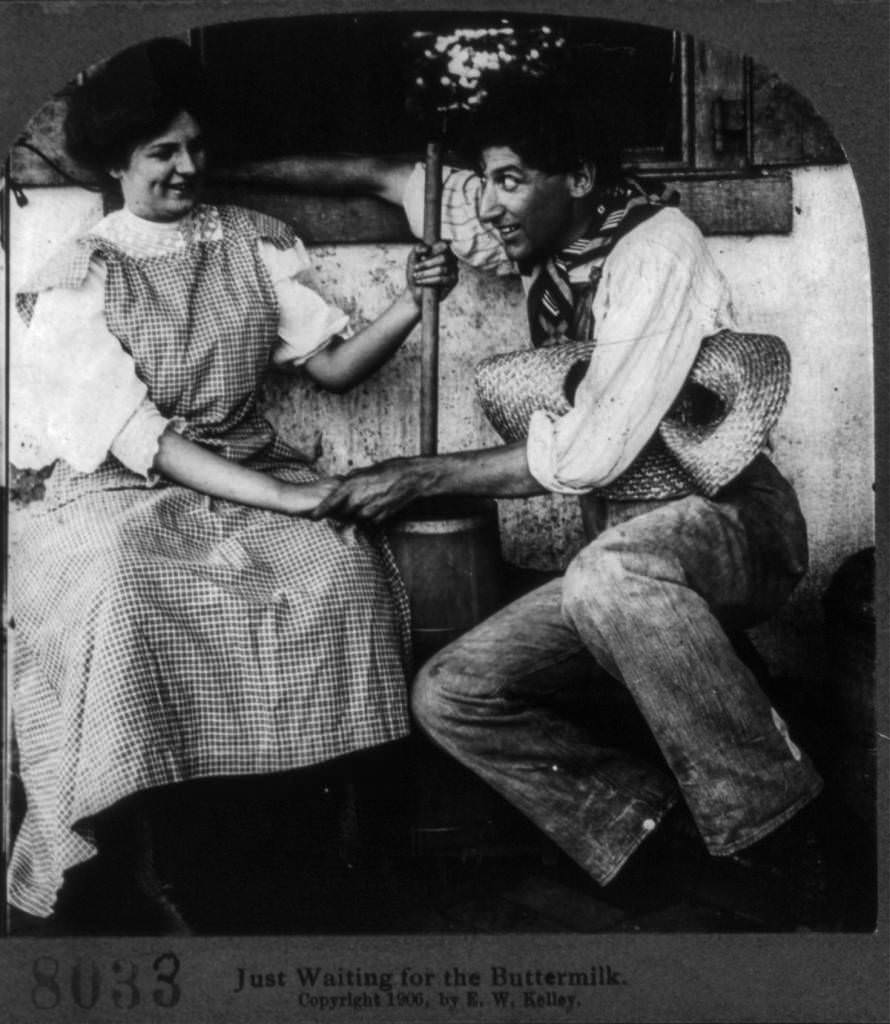
Mischief hangs in the air in “Just Waiting for the Buttermilk (1906),” where a smiling young woman in a gingham dress sits close to a churn while a man in work clothes leans in with a wide, expectant grin. A long churn handle stands between them like a prop in a joke, turning an everyday farm task into a small scene of flirtation and theater. The title does half the work, inviting you to read the moment as playful anticipation rather than simple dairy-making.
Details in clothing and posture point to early-20th-century rural life: rolled sleeves, sturdy trousers, and a broad straw hat suggest outdoor labor, while the woman’s apron-like dress and puffed sleeves echo domestic work and period fashion. Behind them, rough boards and a window frame create a plain, utilitarian backdrop, the kind of setting where chores and conversation naturally mixed. Even without a named place, the image feels rooted in the rhythms of home production—when buttermilk was a familiar reward for the patient turning of a churn.
Humor is what makes this old photo linger, and it works precisely because the subject is so ordinary. The photographer frames the pair tightly, emphasizing expressions and the touch of hands, as if the real “waiting” is for an excuse to linger rather than for the drink itself. For readers interested in vintage photography, rural history, and early American everyday life, this charming snapshot offers a reminder that 1906 wasn’t only about hard work—it also had room for a wink and a laugh.