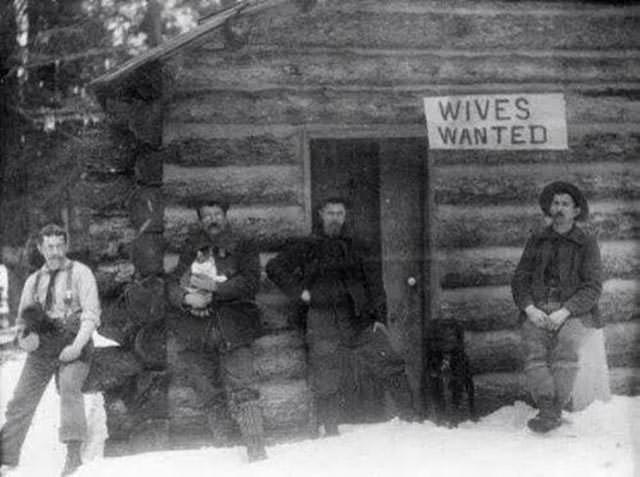
Outside a rough-hewn log cabin, a small group of woodsmen pose in their work clothes, framed by snow on the ground and dark timber behind them. Over the doorway hangs a blunt hand-lettered sign reading “WIVES WANTED,” turning a simple portrait into a punchline that still lands more than a century later. The men’s relaxed stances—leaning on the wall, hands tucked, faces set in half-serious expression—suggest they understood the joke and the message both.
The title places the scene in Montana in 1901, when frontier and resource-work communities often skewed heavily male, especially around logging and camp life. Whether the sign was meant as genuine matchmaking, a playful stunt for the camera, or a bit of gallows humor about isolation, it speaks to the social reality of remote labor: companionship could be as scarce as comfort. Details like suspenders, heavy coats, and wide-brim hats underline the practical wardrobe of men who likely spent their days outdoors, far from town society.
For modern readers hunting for Montana history, early 1900s logging culture, or quirky vintage Americana, this photo offers a compact story with a memorable hook. It’s funny, yes, but also revealing—an artifact of how people used wit to advertise needs and navigate loneliness in harsh places. Seen today, “WIVES WANTED” reads like a caption from another world, yet the longing for connection behind the gag feels familiar.