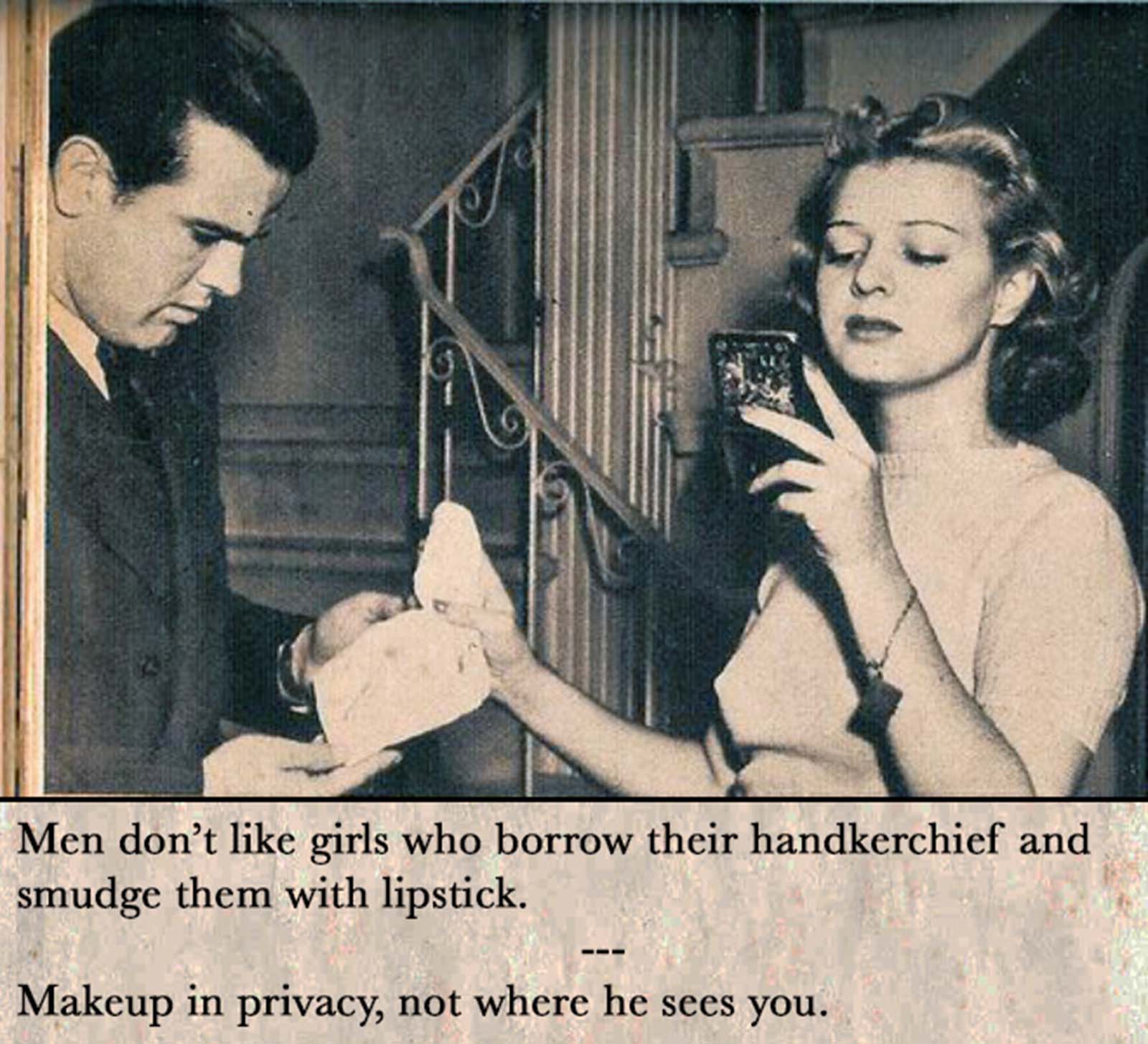
A sharply dressed man studies a rumpled handkerchief with the weary concentration of someone tallying small indignities, while nearby a woman calmly touches up her lipstick in a compact mirror. The domestic setting—stair rail, doorway, and close quarters—turns the moment into a little stage play about manners and expectations. Paired with the caption, the scene leans into comedy: romance reduced to the evidence left behind on a piece of cloth.
Beneath the joke sits a familiar slice of mid-century etiquette culture, when magazines and advice columns loved to legislate “what men like” and “what women should do.” The line about borrowing a handkerchief and smudging it with lipstick frames personal grooming as something to be hidden, and it treats everyday beauty routines as if they were a breach of decorum. The woman’s unbothered expression, contrasted with the man’s dismay, makes the moralizing feel even more theatrical—almost as if the photographer is winking at the audience.
For anyone browsing vintage humor, gender roles, or the history of dating advice, this image is a tidy time capsule: a quick gag built from cosmetics, cleanliness, and the social script of propriety. It also invites a modern read, where the “problem” looks less like lipstick and more like the pressure to perform femininity invisibly. Whether you see it as a funny relic or a telling snapshot of social expectations, the punchline still lands because the domestic drama is so recognizable.