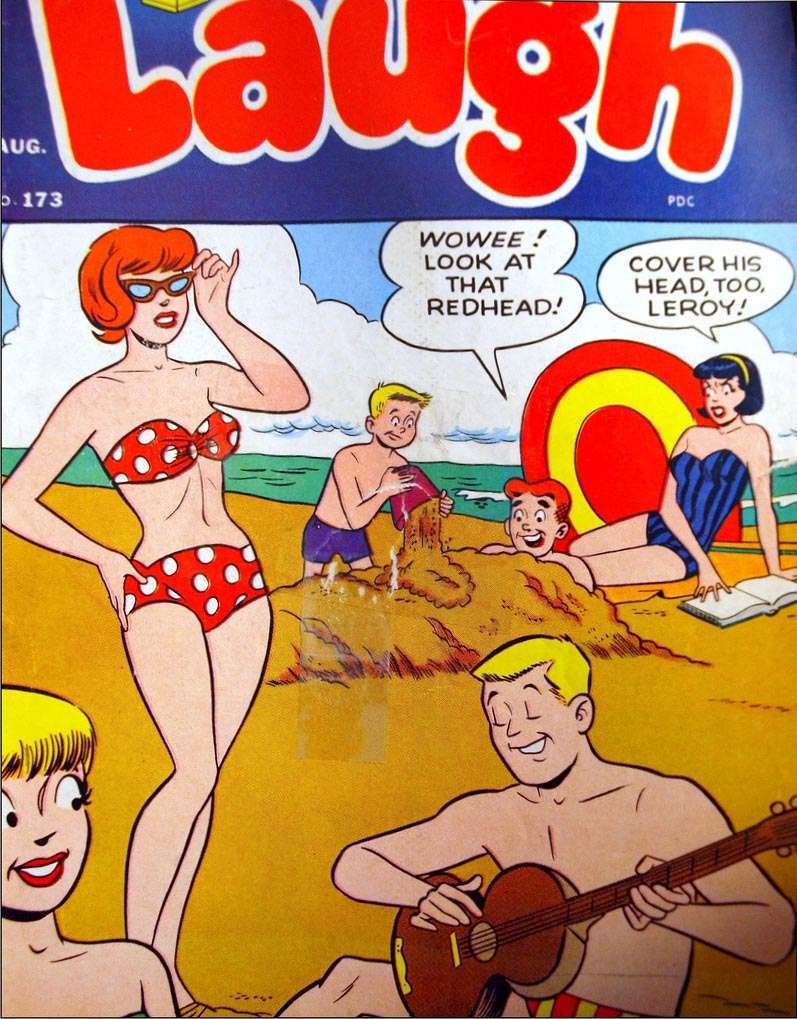
Loud colors and carefree beach energy set the stage on a classic comic-style cover where a red-haired woman in a polka-dot bikini becomes the instant center of attention. Around her, a cluster of grinning teens lounge on the sand, one strumming a guitar while another builds up a sand mound with mischievous purpose. Even without knowing the exact issue or year, the artwork screams mid-century pop culture—bold outlines, bright swimwear, and that wink-and-nudge tone that made newsstands impossible to ignore.
What makes the scene memorable is the dialogue: a shout of “Wowee! Look at that redhead!” followed by the sly instruction to “Cover his head, too, Leroy!” The joke hinges on double meaning—played as harmless slapstick on the surface, yet clearly designed to land differently depending on who’s reading. That balancing act, where innocence and innuendo share the same panel, is exactly the kind of “surprising” humor that threads through old-school ads, comics, and catalogs.
Posts like this invite a closer read of vintage design choices: who the gag is aimed at, how bodies are framed, and why the punchline is allowed to live in the margins. For collectors and casual browsers alike, it’s a reminder that retro “funny” often came packaged with coded suggestions, selling not just entertainment but a whole era’s idea of cheeky charm. If you enjoy exploring hidden meanings in vintage comics and nostalgic advertising, this beach tableau is the perfect jumping-off point.