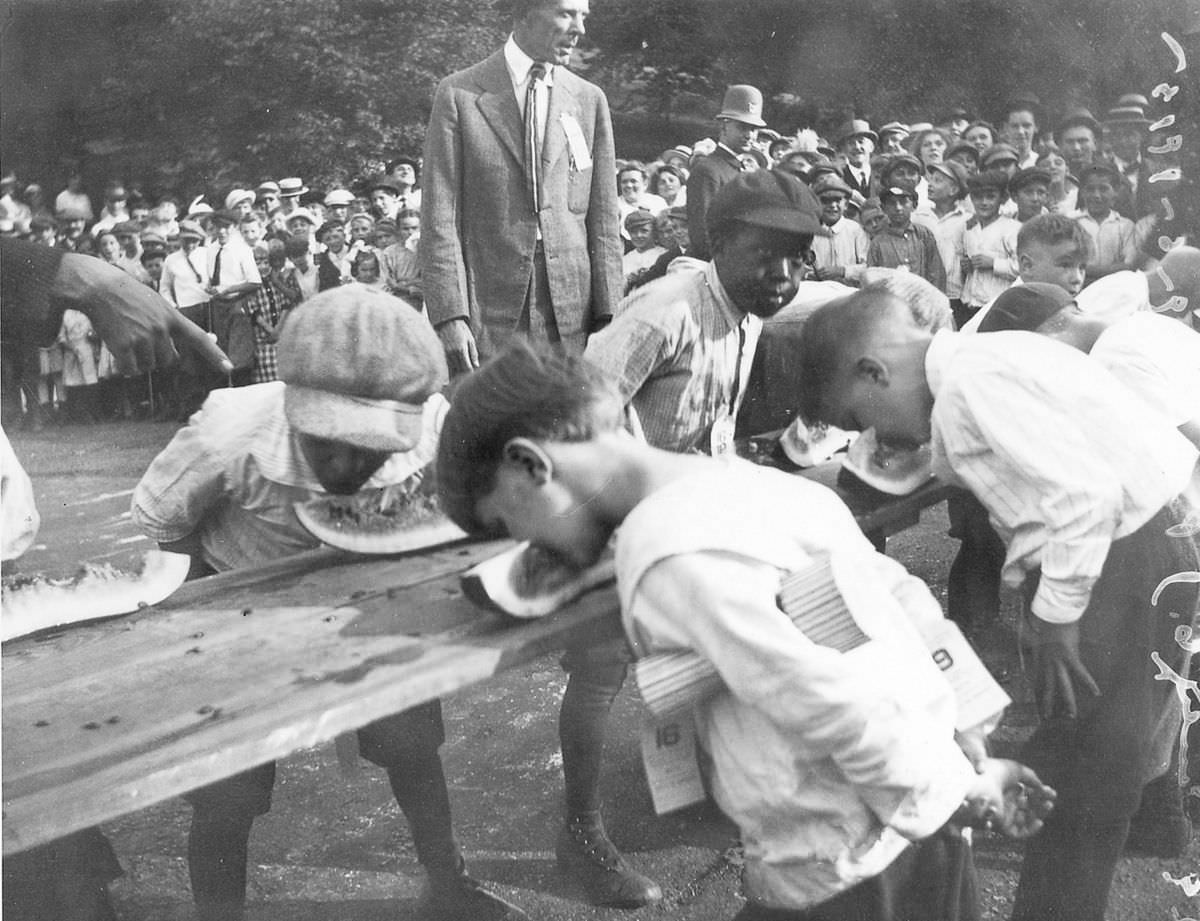
Summer mischief takes center stage in Cincinnati, Ohio, as a line of boys bends over a long wooden table, hands clasped behind their backs, racing to finish thick wedges of watermelon. Faces disappear into rind and pulp, cheeks puffed with hurried bites, while juice and seeds scatter across the tabletop in the blur of competition. The scene has the unmistakable energy of a public pastime—simple rules, loud laughter, and the kind of messy fun that needs no explanation.
Behind the contestants, a dense crowd gathers close, hats and light clothing suggesting warm weather and an outdoor setting, with spectators craning for a better view. An adult stands watch nearby, poised like an official or organizer, adding just enough order to keep the contest moving. The photograph balances chaos and community: children absorbed in the challenge, onlookers united by the shared spectacle, and the ordinary street-fair atmosphere that made such events a highlight of the season.
As a 1915 slice of everyday life, the watermelon-eating contest offers more than a joke—it’s a window into how public recreation looked before modern amusements took over. Details like the rough table, the crowd packed shoulder to shoulder, and the contestants’ determined postures evoke a time when neighborhood gatherings and informal competitions helped define civic summer culture. For anyone searching for early 20th-century Cincinnati history, vintage American festivals, or classic food contests, this lively moment preserves the humor and humanity of the era in a single frame.