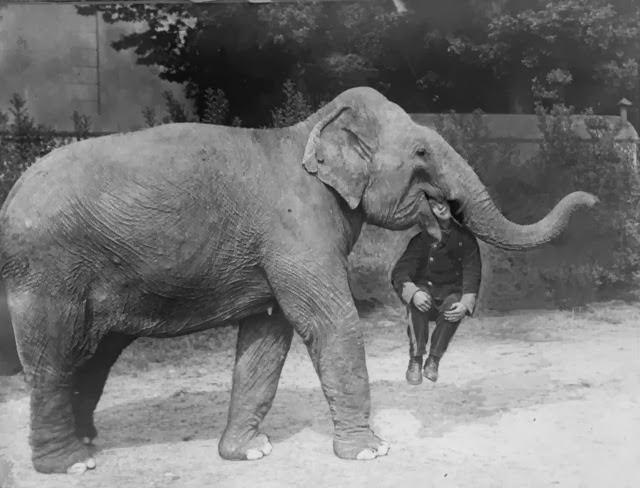
A surprisingly calm elephant dominates the frame, its wrinkled hide and heavy, planted feet rendered in crisp detail as it stands in what looks like an outdoor enclosure. The real stunt, though, is the performer posed with his head inside the animal’s mouth, turning an everyday view of a circus beast into a moment of staged peril. Even without motion, the photo communicates the scale difference—human limbs dangling while the elephant’s trunk stretches forward as if to underline the joke.
Set against the title’s reference to Earl’s Court Circus in 1928, the scene reads like classic interwar showmanship: a blend of bravado, slapstick, and carefully practiced handling presented as effortless spectacle. The elephant’s eye appears relaxed rather than alarmed, hinting that this was less danger than choreography, designed to draw laughter and gasps in equal measure. Details like the performer’s neat attire and the plain, sandy ground add to the behind-the-scenes feel, as if the camera caught a rehearsal or promotional pose rather than a ring performance.
For modern viewers searching for Earl’s Court Circus history, vintage circus photography, or unusual 1920s entertainment, this image offers an unforgettable talking point. It encapsulates how animal acts were marketed through exaggeration and visual punch, relying on a single, bold gag to sell the thrill. Funny at first glance, it also invites a longer look at the culture of spectacle—what audiences expected, what trainers demanded, and how photographs helped make circus legends travel far beyond the tent.