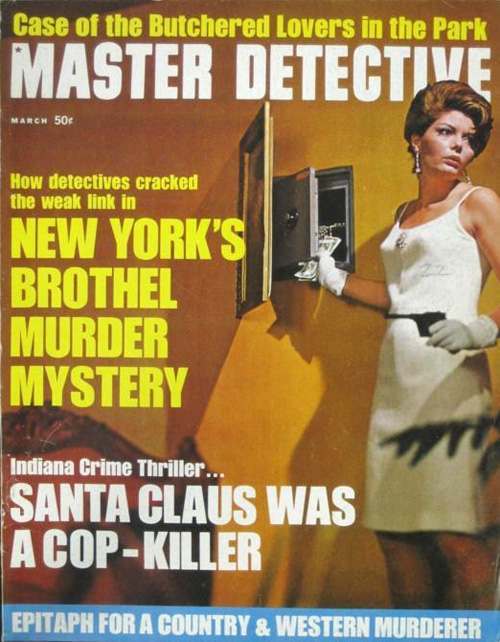
Pulp sensationalism doesn’t get much louder than the cover line “Santa Claus Was a Cop-Killer,” splashed across a crime magazine that promises scandal, violence, and a wink at the reader’s moral shock. The masthead “Master Detective” looms overhead, while stacked, oversized type shouts about a “New York’s brothel murder mystery” and the “case of the butchered lovers in the park,” selling danger as entertainment with the blunt force of tabloid prose.
A glamorous woman in a fitted white dress and gloves stands beside an open wall safe, caught between elegance and incrimination in a scene designed to tease a story without telling it. The warm, shadowy interior, the hard geometry of the safe door, and her sidelong glance all play into the era’s visual grammar: sexuality, secrecy, and crime packaged as a single, irresistible narrative hook.
Taken together, the cover offers a sharp glimpse into mid-century true-crime marketing, where provocative headlines and staged noir imagery blurred the line between reportage and fantasy. For readers hunting for vintage crime magazine art, “Master Detective” ephemera, or the history of pulp publishing’s lurid language, this piece is a vivid example of how print culture turned fear and fascination into a collectible spectacle.