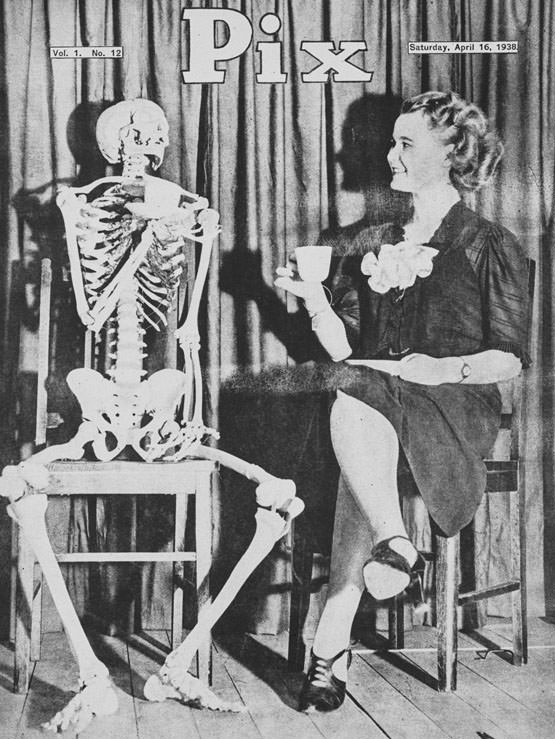
Front and center on the Pix magazine cover, a grinning woman raises a cup as if to toast her most unlikely companion: a full skeleton propped on a chair and posed in perfect “social hour” fashion. The playful staging leans into the magazine’s bold, oversized masthead while the backdrop of heavy curtains and a bare wooden floor reads like a simple studio set built for a visual gag. It’s a crisp snapshot of 1930s humor—polished, theatrical, and unabashedly cheeky.
Comedy here comes from contrast: living warmth against skeletal stillness, elegance against absurdity. The skeleton’s arms are arranged as though mid-sip or mid-gesture, mirroring the woman’s relaxed posture and turned smile, turning the scene into a mock conversation without needing any caption. Even in black and white, the lighting creates strong shadows that heighten the illusion of life, making the prank feel staged yet oddly personable.
As a piece of vintage magazine art, this 1938 “funny skeleton” cover reflects how pop culture could flirt with the macabre while keeping it light enough for mainstream laughs. Collectors of Pix magazine memorabilia, fans of dark comedy, and anyone hunting for unusual 1930s photography will appreciate how neatly it balances spooky imagery with everyday charm. It’s the kind of historical photo that still plays well today—proof that visual jokes don’t need sound to land.