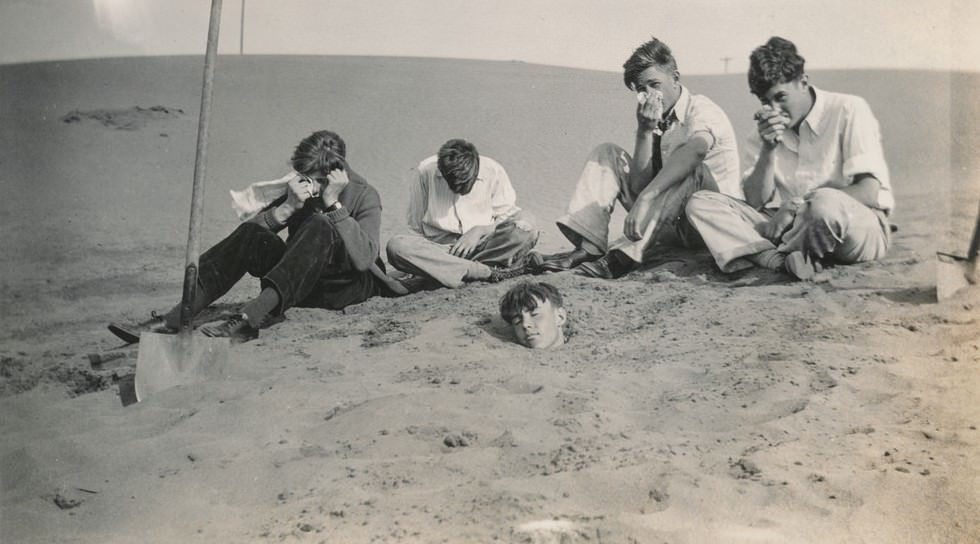
A line of young men sits on a sandy rise, shoulders slumped and faces hidden in hands as if overcome by grief. In front of them, their “departed” companion appears only as a head emerging from a carefully packed mound, turning the solemn pose into a playful beachside performance. A shovel planted nearby adds to the mock-serious mood, like a prop borrowed from a stage rather than a cemetery.
The scene thrives on contrast: earnest gestures of mourning against the unmistakably mischievous gag of a friend buried in sand. Their rolled sleeves, dusty trousers, and relaxed postures suggest an informal outing, while the open dunes behind them create a stark, theatrical backdrop. Even without a known caption beyond the title, the photograph reads as a snapshot of camaraderie—boys experimenting with humor, drama, and the camera’s attention all at once.
For anyone browsing historical beach photos or quirky vintage snapshots, this image offers more than a quick laugh; it hints at how earlier generations played, posed, and told stories with simple means. The staged “funeral” in the sand feels like a prank meant to be remembered, preserved, and passed around long after the day’s footprints were erased. As a piece of social history, it captures youth culture in miniature: friends, boredom, imagination, and the enduring urge to turn everyday life into a memorable picture.