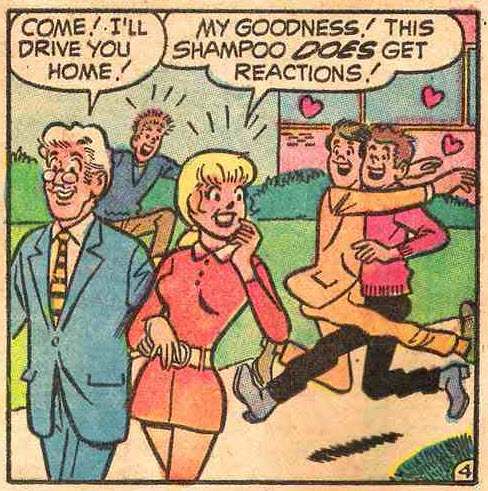
Pastel inks and buoyant slapstick set the tone in this Archie Comics panel, where a grinning older man offers a ride home while a stylish blonde woman reacts with a knowing quip about shampoo that “does get reactions.” The gag lands on double meaning, mixing everyday teen talk with flirtation in a way that feels distinctly of its era. Even without a full page for context, the body language and the wink-wink dialogue signal how the “funny” could drift into the suggestive.
Across the background, hearts float above a tightly embraced couple, while another character’s exaggerated stride and shocked posture add a burst of physical comedy. That contrast—romance coded in symbols, mischief played for laughs—helps explain why the 1970s are often remembered as a moment when mainstream humor comics tested how far they could push innuendo. The panel’s bright colors and rounded expressions keep everything light, even as the jokes lean harder into adult implication.
Reading it today offers a small window into changing tastes in pop culture, advertising, and teen slang, especially the way grooming products and “reactions” became shorthand for attraction. Fans searching for Archie Comics history, 1970s comic art, or the evolution of saucy humor in classic funny pages will recognize the formula: clean lines, big smiles, and a punchline that flirts with the boundary without crossing it. It’s a playful reminder that the heat in these pages often came less from explicit content and more from what was artfully left unsaid.