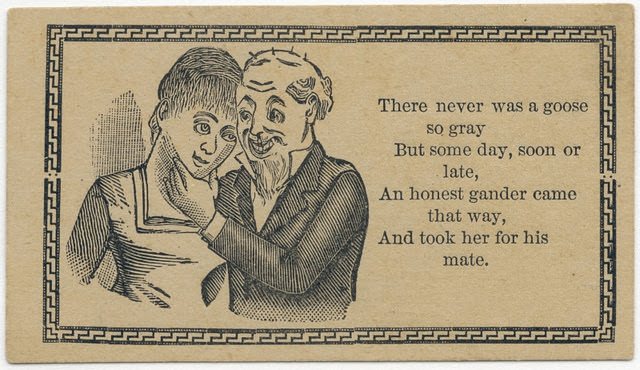
Tucked inside a decorative border, a slyly grinning gentleman leans in close and cups the ear of a wide-eyed companion, turning a simple whisper into a little stage scene. The linework is spare but expressive—raised brows, pursed lips, and that conspiratorial posture that instantly signals gossip, flirtation, or both. As a piece of nineteenth-century social humor, it works the way the best icebreakers do: by inviting the viewer to imagine what was said and how the recipient will respond.
On the right, a short rhyming verse about a “goose so gray” and an “honest gander” delivers a playful moral about pairing off, using barnyard courtship as a safe, comic stand-in for human romance. The joke lands in the contrast between polite manners and earthy metaphor, a common tactic in humorous acquaintance cards meant to spark conversation without overstepping decorum. Even without specific names or a printed place, the design speaks to a culture that loved wordplay, light teasing, and the thrill of a coded message shared in public.
Collectors today often prize these vintage novelty cards for what they reveal about everyday communication—how people flirted, joked, and nudged acquaintances into familiarity long before texts and memes. The illustration-and-verse format made them easy to exchange, keep, and re-read, functioning as both calling card and comedic prompt. For anyone exploring 19th-century ephemera, social history, or antique humor, this piece offers a charming glimpse into the art of breaking the ice with a wink and a rhyme.