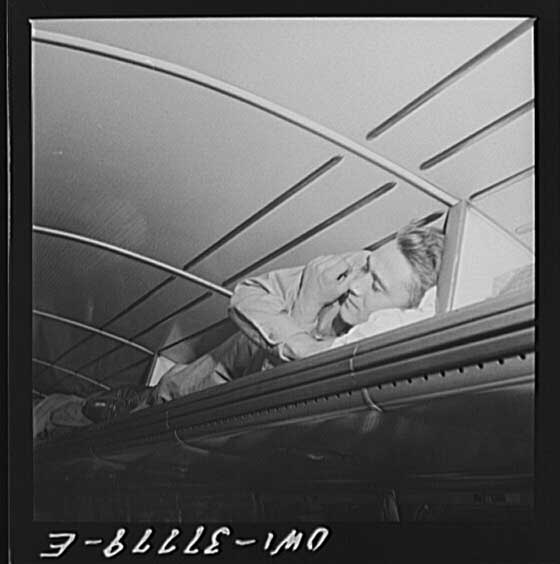
High above the aisle of a Greyhound bus, a uniformed soldier has claimed the luggage rack as a makeshift bunk, curled on his side with one hand tucked under his cheek. The arched ceiling ribs and tight framing emphasize just how little space he has, turning an everyday storage shelf into the only quiet corner available. It’s an instantly funny sight, but it also reads like a practical solution born from long-distance wartime travel.
In 1943, buses were a crucial thread in the home-front transportation network, carrying servicemen and civilians along crowded routes when trains and fuel were under pressure. The soldier’s improvised nap hints at packed seats, restless schedules, and the kind of exhaustion that makes comfort secondary to simply getting a few minutes of sleep. Details like the overhead rack, the stark interior lighting, and the tidy uniform place the scene firmly in the world of mid-century American transit.
Humor is what draws you in, yet the photograph lingers because it feels so relatable: a young person squeezed between duty and fatigue, making do with whatever space exists. For anyone searching for WWII home front photos, Greyhound bus history, or candid wartime travel images, this moment offers a small, human-scale counterpoint to the era’s grand narratives. It’s a reminder that history is often lived in cramped compartments, measured in miles, and survived one stolen nap at a time.