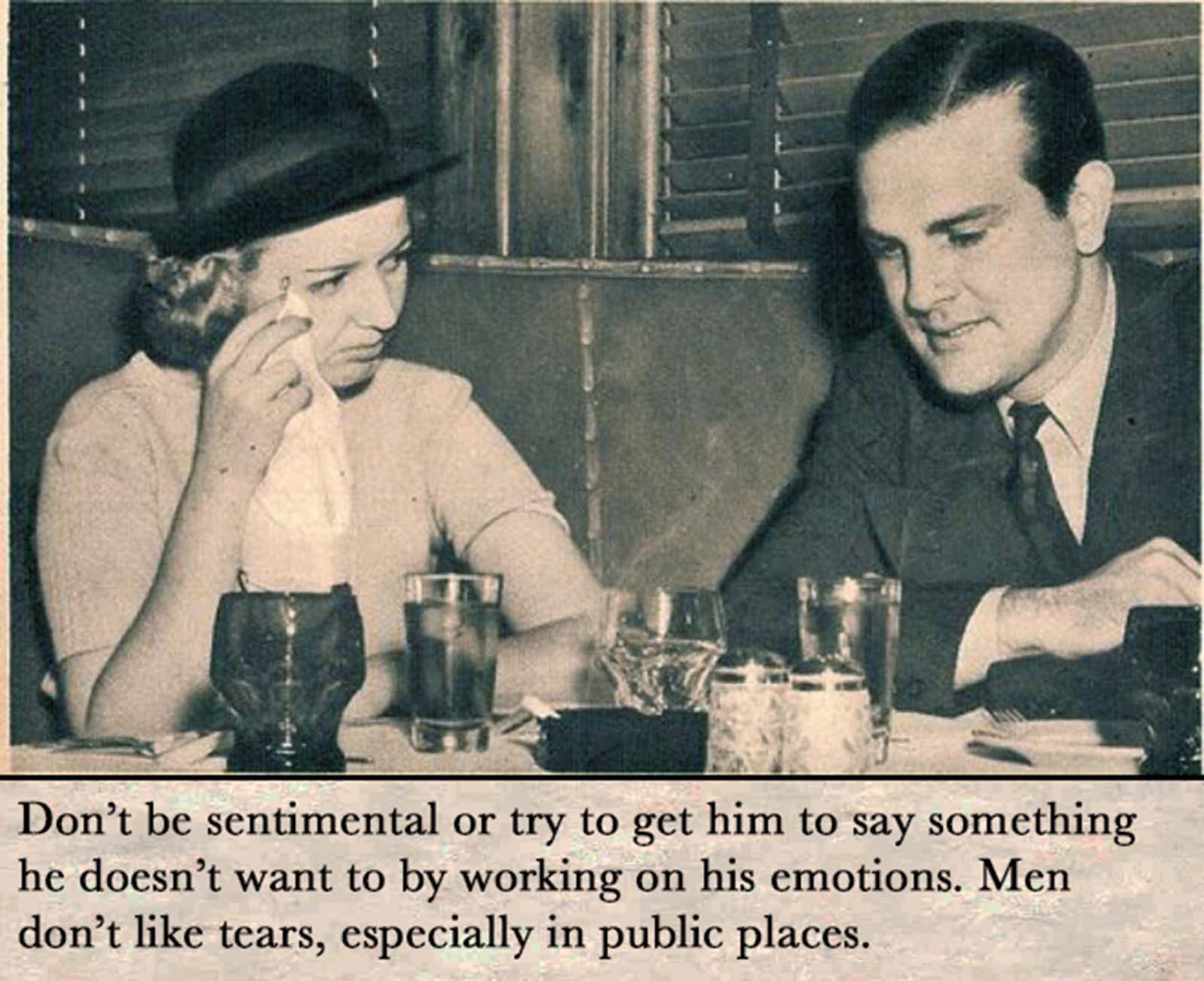
Across a small table set with water glasses and a dark tumbler, a woman in a brimmed hat dabs her eyes with a handkerchief while the man beside her leans in, looking composed and slightly distracted. The scene feels like a mid‑century restaurant or lounge—close quarters, shuttered windows behind them, and that familiar hush of public conversation where private feelings are supposed to stay hidden. Even without a caption, the body language reads as a tense pause in a relationship talk.
The title’s blunt advice—“Don’t be sentimental… Men don’t like tears, especially in public places.”—plants the photo firmly in the world of vintage etiquette and gender expectations. It’s funny in the way old social rules can be funny: the insistence that emotions must be managed, that persuasion should be “rational,” and that a man’s comfort in public outweighs a woman’s visible distress. Seen today, the line doubles as a time capsule of how people were taught to perform masculinity and femininity at the table, under the gaze of strangers.
As a piece of historical humor, this image works because it catches the friction between real human feelings and the scripted “proper” behavior sold in advice columns and magazines. The handkerchief, the stiff suit, the carefully arranged drinks—every detail reinforces the era’s preference for restraint, even when a conversation has clearly turned personal. For readers searching vintage relationship advice, mid-century social etiquette, or retro gender roles, the photo offers a sharp, memorable glimpse of how public emotion was policed—and how that message lands very differently now.