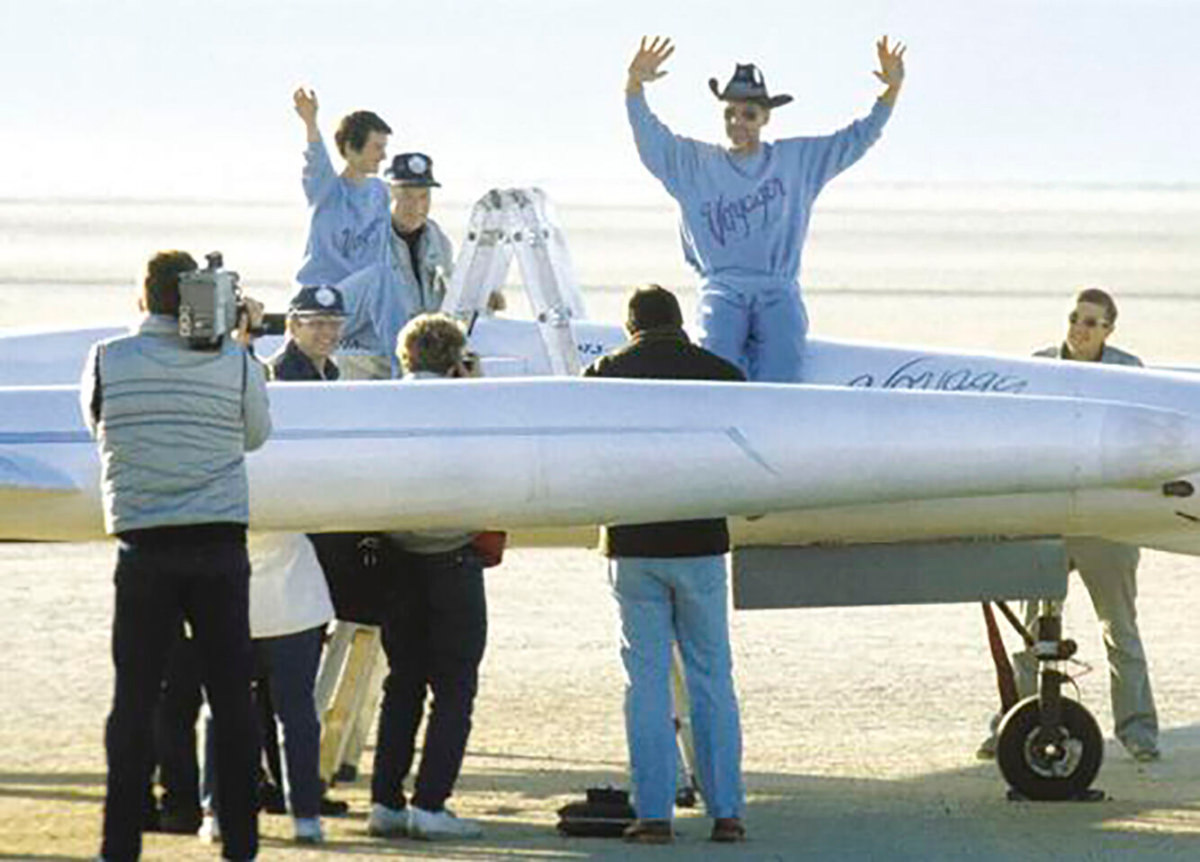
Arms raised in celebration, a small group clusters around the sleek white wing of the Rutan Voyager while a camera operator records the moment. The aircraft’s pencil-thin profile dominates the foreground, its landing gear planted on a wide, sunlit runway that feels more like an open expanse than a conventional airport. Matching shirts marked “Voyager” and a ladder nearby hint at the hands-on teamwork behind the spectacle—pilots, crew, and supporters gathering close to the machine that made aviation history.
The title’s promise of a nonstop, no-refuel flight around the world comes alive in details like the Voyager’s long wings and lightweight, purpose-built look, hallmarks of a design obsessed with efficiency. This was not glamour aviation; it was endurance engineering, where every pound mattered and every system had to survive days of continuous operation. Inventions in materials, aerodynamics, and fuel management converged into a single experimental aircraft capable of pushing beyond what many thought practical.
What makes the scene linger isn’t just the technology, but the human relief etched into body language—hands up, heads turned toward the cameras, people leaning in as if to confirm it really happened. For readers searching the story behind the Rutan Voyager, this photo serves as a doorway into the era when record-setting flights were still won by clever design, meticulous planning, and a willingness to bet everything on one fragile airframe. It’s a reminder that the most famous aviation milestones are often born on quiet runways, in bright daylight, with a crowd small enough to fit beneath one wing.