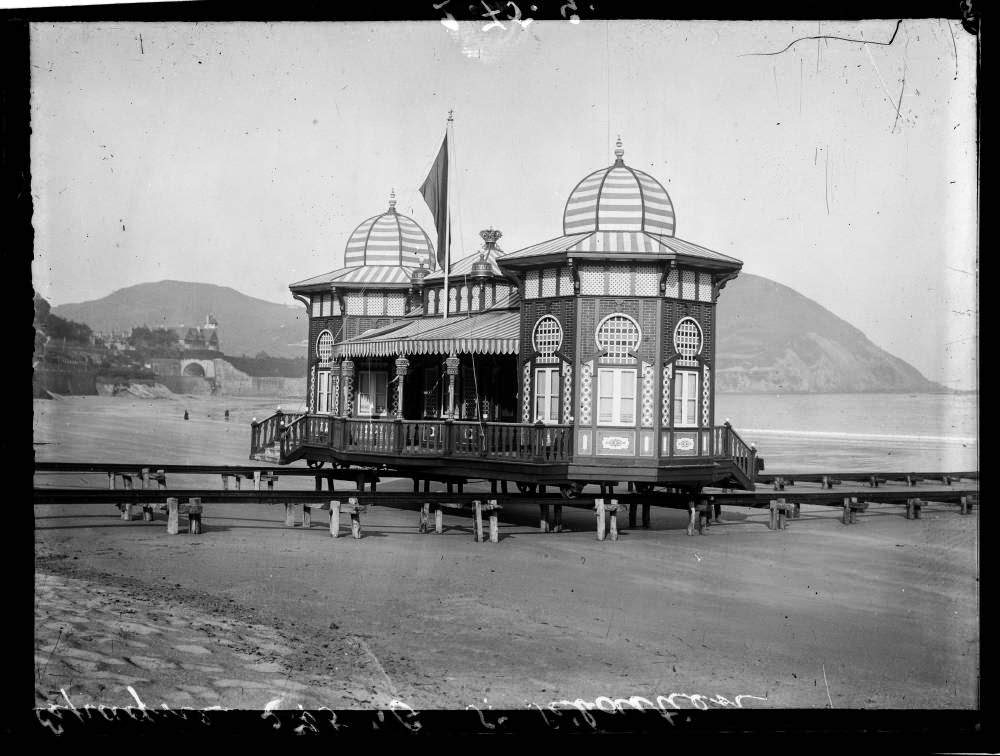
Perched above the tide on a forest of pilings, an ornate seaside pavilion with striped domes and a fluttering flag turns a simple day at the shore into a small architectural spectacle. Decorative panels, arched windows, and a wraparound veranda suggest the era’s delight in leisure—while the long, low walkways around it hint at a coastline carefully engineered for strolling, observing, and arriving in style. In the distance, hazy hills and a settled shoreline frame the scene, reinforcing how beachgoing was as much about being seen as it was about swimming.
Victorian bathing culture thrived on contradictions: the sea was celebrated for health and recreation, yet modesty demanded elaborate solutions. That tension produced “bathing machines”—wheeled changing huts designed to ferry bathers toward deeper water without an unseemly promenade across open sand. Even when the structure was grander than a typical cart-like machine, the same logic applied: privacy, propriety, and controlled access to the surf shaped everything from platforms to partitions.
Browsing these historic photos reveals how quickly a practical invention became part of the seaside economy, with beaches outfitted like outdoor salons complete with railings, shelters, and staff-ready entrances. The details matter for anyone interested in Victorian-era inventions, early tourism, and the history of swimwear and social norms: each image is a reminder that technology often serves etiquette as much as comfort. “Going Swimming On Wheels” explores that strange, fascinating chapter when a trip into the water began behind a door, rolled toward the waves.