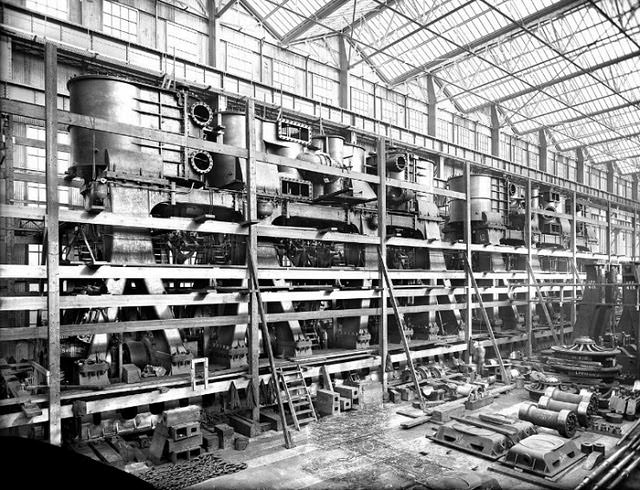
Steel ribs rise in orderly tiers inside a vast shipyard hall, where overhead trusses and tall windows frame the monumental scale of ocean-liner construction. The partially built hull structure—dense with beams, openings, and bracing—reads like a cross-section of ambition, showing how the “unsinkable” idea was rooted in engineering as much as in marketing. For readers searching Titanic construction photos, this scene offers a close look at the industrial environment that made such a ship possible.
Along the floor, scattered machinery parts, heavy fittings, and work platforms hint at the choreography behind the build: components prepared, lifted, aligned, and secured with relentless precision. The visible compartments and internal frameworks evoke the era’s faith in modern shipbuilding inventions—watertight thinking, reinforced structural layouts, and the careful division of space meant to manage risk at sea. Even without identifying labels, the image emphasizes how much of the liner’s story began long before any passenger stepped aboard.
Legend grew later, but the foundations of Titanic fame were forged in places like this, where innovation was measured in rivets, plates, and hours of labor. The photograph invites you to linger on the details—the massive scale, the unfinished geometry, and the workshop clutter that signals progress in motion. As part of “Building the Unsinkable,” it serves as a vivid reminder that the Titanic’s rise to prominence was built from industrial confidence, technical invention, and the spectacle of modern engineering.