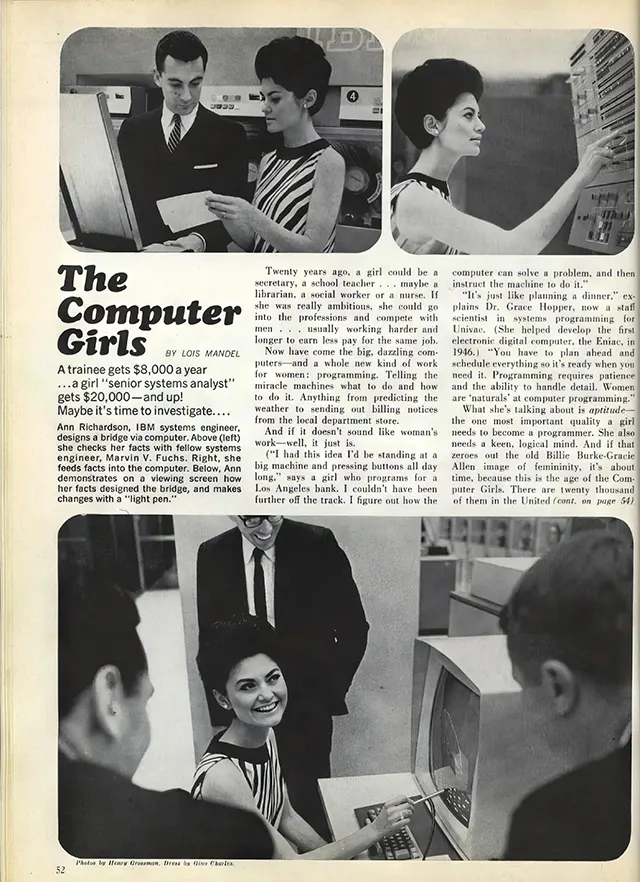
Bold headline typography declares “The Computer Girls,” framing a mid‑century magazine spread that is as much about persuasion as it is about technology. Across its panels, women in smart office attire confer with male colleagues, consult notes, and lean into the glow of large consoles—an everyday workplace scene presented like a glimpse of the future. The layout and language lean on a familiar, almost breezy confidence, promising that the world of computers is not only expanding but opening doors.
Behind the period styling sits a deeper story that fits the post’s theme: women as human computers and early programmers who translated complex scientific problems into repeatable steps. The photo’s emphasis on interfaces—buttons, dials, and printouts—echoes the reality of the job, where careful checking, methodical calculation, and clear communication mattered as much as raw math. It also hints at the shifting meaning of “computer,” from a person performing calculations to a machine being instructed, tested, and trusted.
Reading this image today is a reminder that modern science inventions were shaped not just by hardware, but by the people who made systems usable, accurate, and reliable. The article-style framing sells opportunity, yet the visual dynamics—who explains, who listens, who operates—invite questions about credit, authority, and whose labor became invisible once the machine took center stage. For readers interested in the history of computing, this post uses the photograph to spotlight the women whose careful work helped build the foundations of programming, data processing, and the scientific workflows we now take for granted.