Bold retail promises have always leaned on novelty, and the idea of a Macy’s vending machine selling men’s shorts for just 97 cents fits neatly into that tradition. The appeal wasn’t only the low price—it was the thrill of instant purchase, no counter line, no fitting-room wait, just a coin slot and a clunk of machinery standing in for a sales clerk. As a snapshot of consumer culture, it hints at a moment when department stores experimented with automation to make everyday essentials feel modern and effortless.
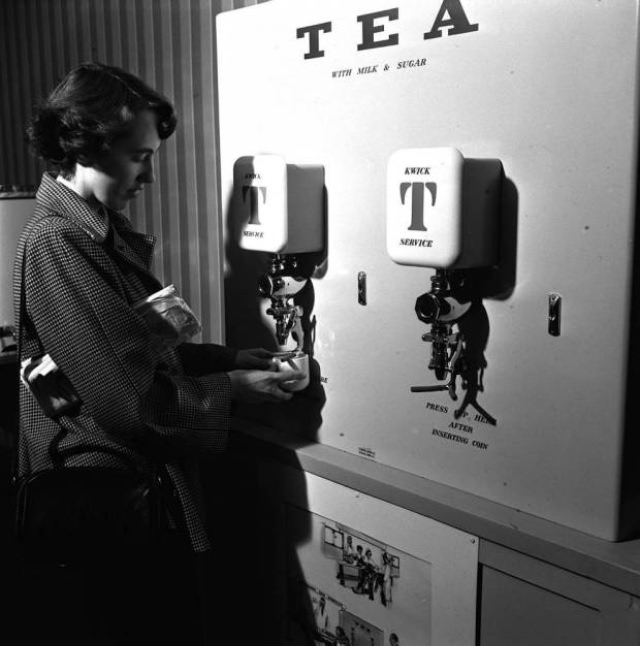
Here, a shopper focuses on a wall-mounted dispenser labeled “TEA,” with large lettering that reads “WITH MILK & SUGAR,” and twin spouts marked for quick service. The clean industrial panel, simple instructions, and utilitarian hardware speak to the same mindset behind vending-store experiments: standardized portions, predictable results, and a streamlined transaction. Even without seeing the shorts machine itself, the photograph echoes the era’s fascination with machines that could serve, sell, and satisfy in seconds.
Inventions like these weren’t just gadgets; they were small arguments about how shopping—and life—should work. Department stores had long been theaters of convenience and temptation, and vending machines extended that stage into corridors, cafeterias, and busy corners where speed mattered. For anyone interested in retail history, mid-century design, or the quirky evolution of automated shopping, this image and its 97-cent promise offer a vivid reminder that “self-service” once felt like the future arriving one coin at a time.