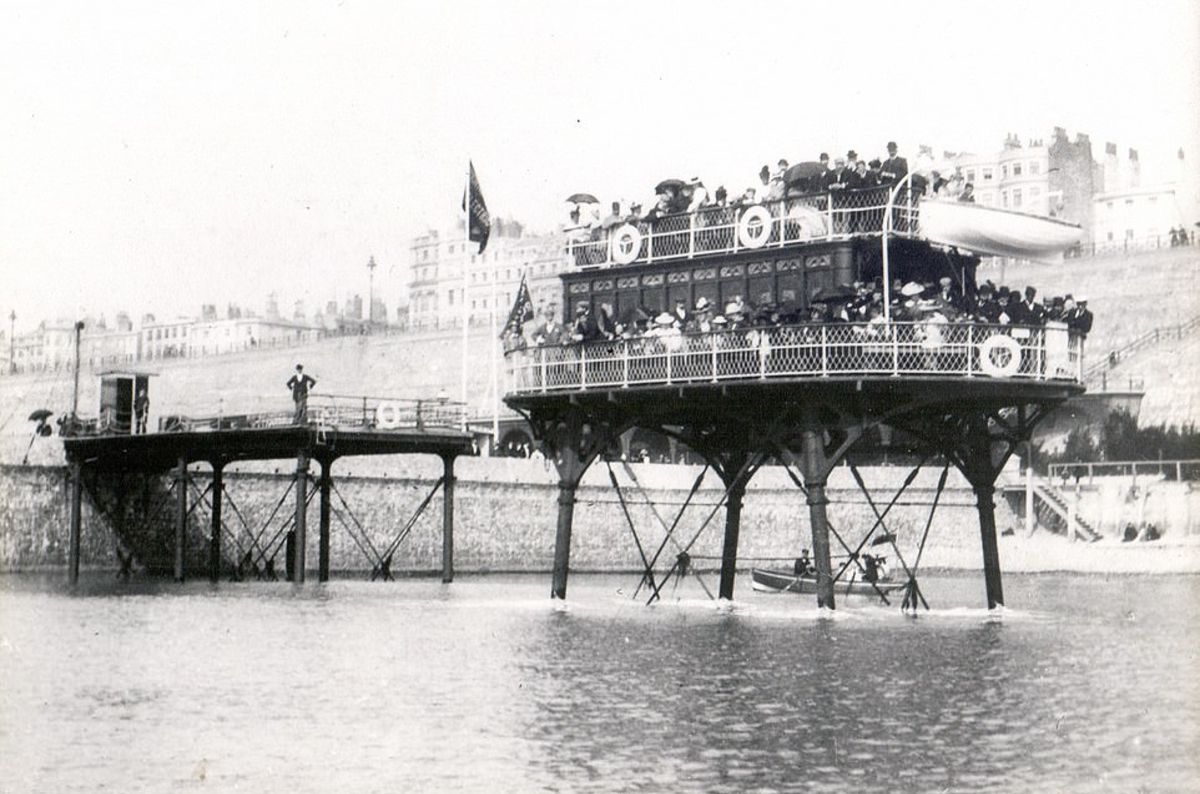
Brighton’s shoreline once hosted a transport experiment that looked more like a seaside pavilion on stilts than a railway carriage. In the photo, a double‑deck passenger car rides high above the water, packed with well‑dressed onlookers who lean against ornate railings as if they’re on an excursion steamer. The structure’s spindly supports and the open expanse beneath it explain the nickname “Daddy Long-Legs,” a piece of Victorian ingenuity built to stride across the tidal shallows.
Rather than hugging the promenade, this odd electric train ran out over the beach on a narrow track, keeping its passengers aloft while waves moved in and out below. Details like the crowded upper deck, the life rings fixed along the sides, and the surrounding waterfront buildings anchor the scene in the culture of late‑19th‑century leisure—when engineering novelties were attractions in their own right. It’s a striking reminder that the age of invention was also an age of spectacle, where a trip could be as much about being seen as getting somewhere.
Stories of early electric railways often focus on city trams and underground lines, but Brighton’s “weird but interesting” seafront solution shows how local conditions inspired unconventional designs. The title’s reference to 1896 places this firmly in the pioneering years of electrified transport, when builders tested bold ideas with limited precedent. For readers interested in Victorian engineering, coastal history, and the quirks of British innovation, this historical photo offers a vivid window into a moment when the future briefly came walking out to sea.