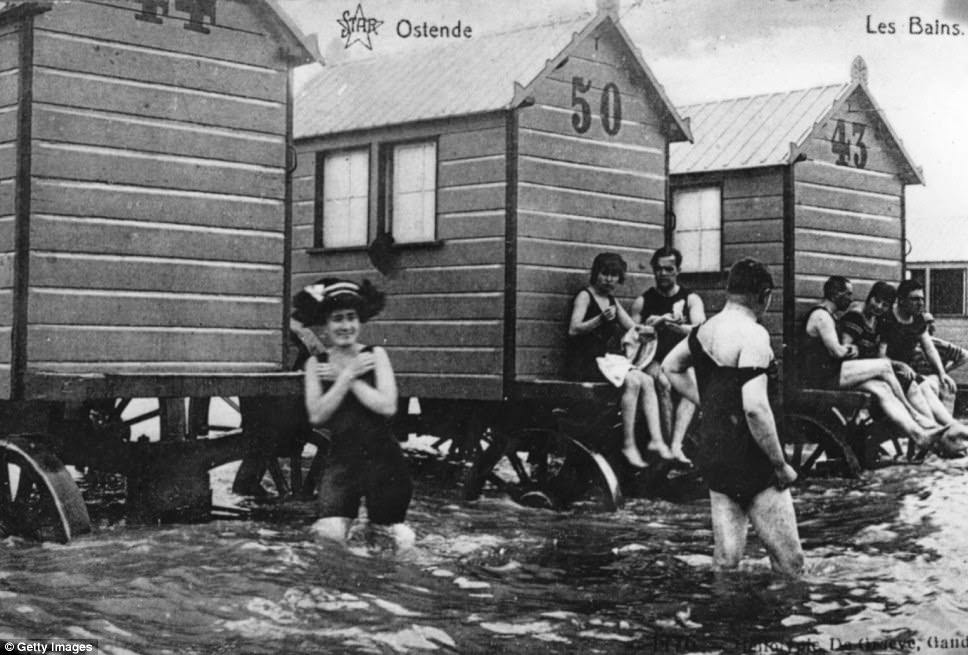
Wheeled beach huts sit in a tidy row at the water’s edge, their plank walls and peaked roofs marked with bold numbers like “50” and “43.” A small sign reads “Ostende” alongside “Les Bains,” grounding the scene in a seaside resort culture where bathing was organized, supervised, and carefully staged. In the shallows, swimmers in dark, modest suits wade and splash while others perch on the platforms beside the cabins, half resting and half watching.
Bathing machines were clever Victorian-era inventions designed to solve a social problem: how to enjoy the sea without offending strict ideas about privacy and propriety. Rolled down toward deeper water, these mobile changing rooms let bathers step directly into the surf, minimizing exposure on the open beach. The construction feels practical and almost industrial—wooden panels, high wheels, sturdy frames—yet the atmosphere is unmistakably recreational, a blend of innovation and holiday ritual.
Moments like this reveal how modern beachgoing was built piece by piece, long before streamlined swimsuits and open promenades became normal. The numbered cabins hint at an efficient system of rentals and queues, while the relaxed poses suggest that even within rules, people found room for play. For anyone searching for historic photos of bathing machines, Victorian seaside fashion, or early seaside tourism, this image offers a vivid snapshot of “going swimming on wheels” in action.