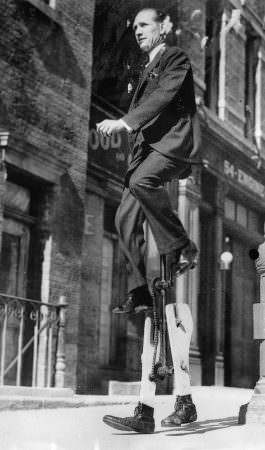
Balancing high above the pavement, a sharply dressed man tests an unusual walking device that turns each step into a small feat of engineering. The apparatus extends his legs with tall, rigid supports and foot platforms, giving him a towering silhouette that would have stopped passersby in their tracks. It’s the sort of street-side demonstration that blurs the line between practical mobility aid and showman’s invention.
Details in the scene place the experiment in a busy urban setting: brick façades, shopfront signage, and a streetlamp frame the performer like a stage set. His posture—upright, focused, hands poised for balance—suggests the careful concentration required to master such a contraption. Whether meant for speed, novelty, or a new approach to locomotion, the design hints at an era when inventors weren’t shy about taking bold prototypes into public view.
“Walking device” is a simple title for a complicated idea: changing how the human body meets the ground. For readers interested in inventions, early mobility concepts, and the history of everyday technology, this historical photo offers a vivid glimpse of experimentation in motion. It also invites the timeless question behind so many patents and prototypes—was it truly useful, or simply unforgettable?