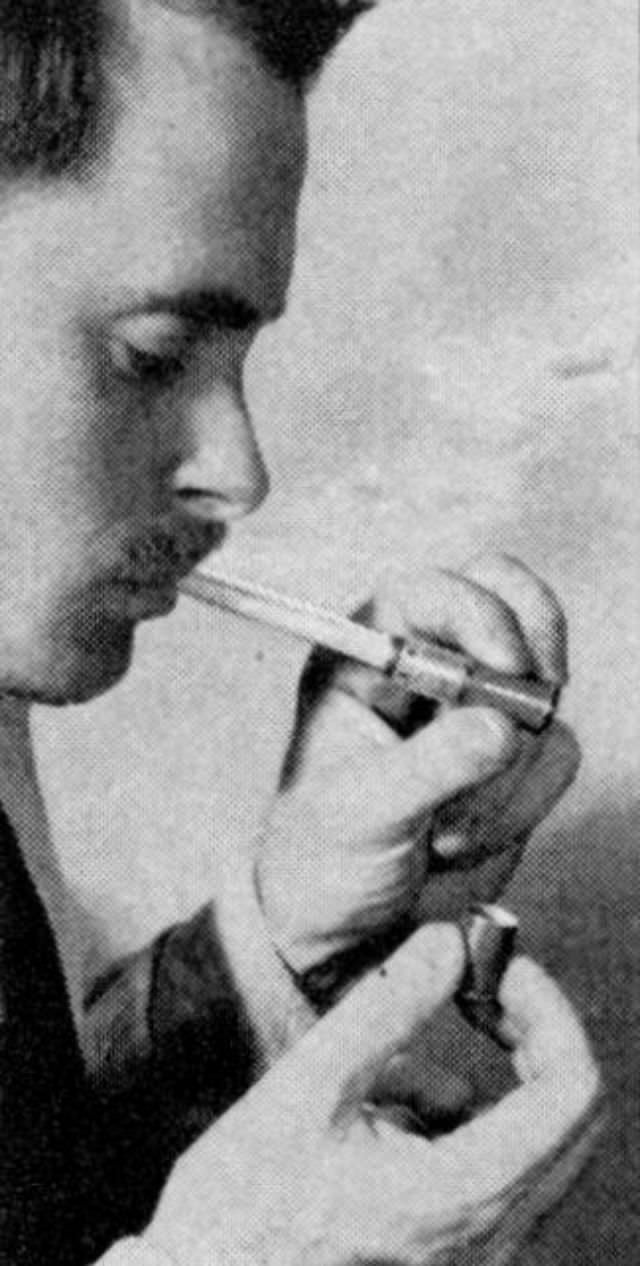
Close-up and intent, the 1933 scene centers on a man bringing a cigarette to his lips while concentrating on a small, hand-held device. The grainy halftone texture suggests the picture circulated in print—exactly the kind of clipped, practical illustration used to introduce readers to a new idea. In his hands, a compact mechanism sits near the cigarette tip, implying a modern alternative to the familiar match or lighter.
The title, “Cigarette Lighted by Glow,” points to the era’s fascination with novel forms of ignition, when “glow” could mean an electrically heated element rather than an open flame. That promise of cleaner, controlled lighting fits neatly into the interwar appetite for gadgets: small personal inventions meant to streamline everyday habits and showcase technical progress. Even without detailed context, the photograph reads like a demonstration—proof that the concept works, captured at the decisive moment before the first draw.
As an artifact of invention culture, this historical photo offers more than a smoking accessory; it reflects the marketing of convenience and modernity in the early 20th century. For collectors and researchers searching for 1930s inventions, vintage cigarette lighters, or early electric heating devices, it’s a striking example of how innovation was documented and sold to the public. The tight framing, the careful hands, and the promised “glow” all underline a simple message: the future could fit in your pocket.