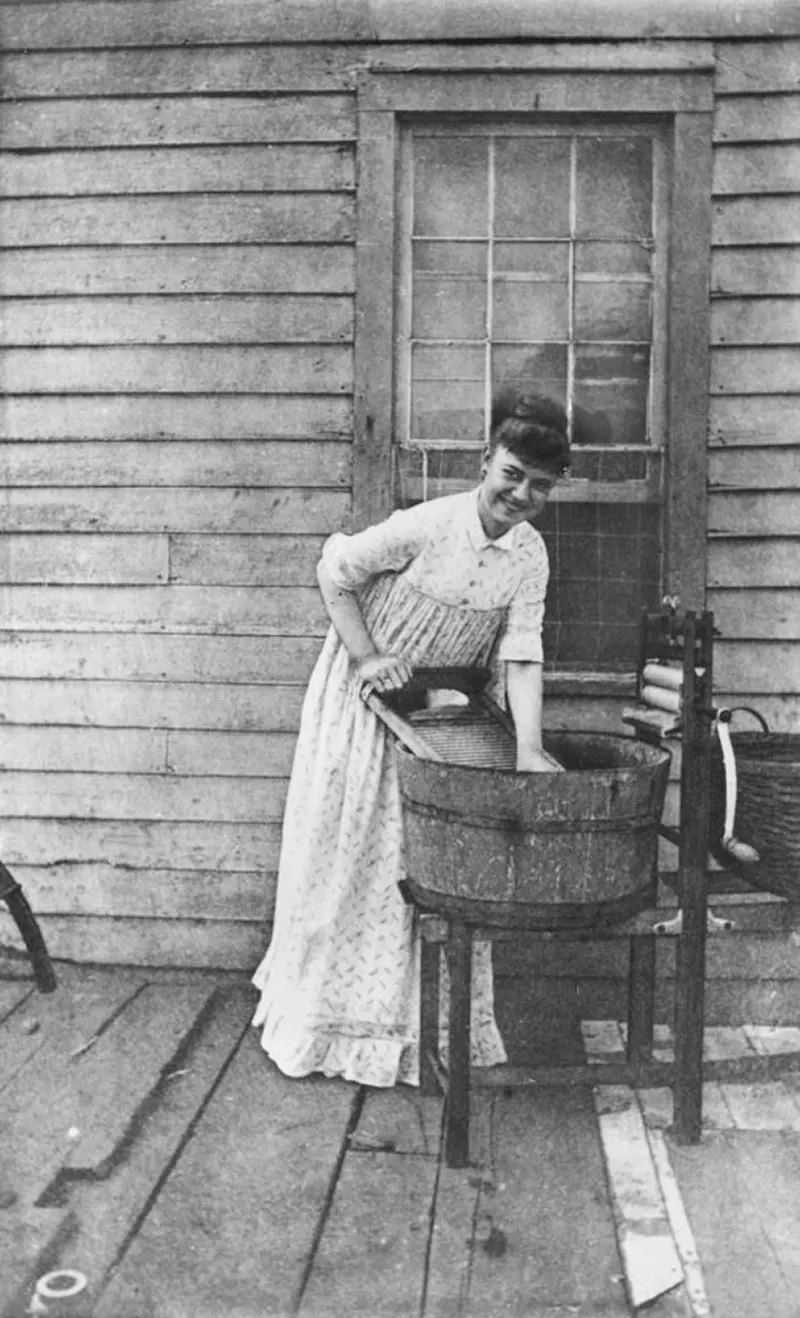
Leaning over a wooden wash tub on a simple porch, a woman works the kind of hand-powered laundry setup that defined domestic life before electricity became commonplace. The ribbed scrub board, the deep barrel-like basin, and the plain clapboard wall behind her create a grounded glimpse of everyday labor—an era when “laundry day” meant hauling water, scrubbing by hand, and managing heavy wet fabric with stamina and skill.
From the 1880s through the mid-20th century, washing machine inventions steadily tried to tame that workload, borrowing pieces of this scene and mechanizing them one by one. Early devices often mimicked the motion of arm and board with plungers, paddles, and cranks, later evolving into wringers that squeezed out water and, eventually, motor-driven tubs that agitated clothes with far less human effort. Looking closely at the tools in this photograph makes it easier to understand what inventors were responding to: time, fatigue, and the unglamorous physics of soap, water, and cloth.
A Photographic Journey Through the Early Days of Washing Machines, 1880s-1950s Inventions uses images like this to trace how household technology reshaped routines and expectations. The story isn’t only about clever mechanics; it’s about the quiet revolution of convenience that moved washing from outdoor tubs and manual scrubbing toward the enclosed, reliable machines that became a hallmark of modern homes. For readers searching vintage washing machines, early laundry equipment, or the history of household inventions, this post offers a richly visual path through the innovations that changed weekly life.