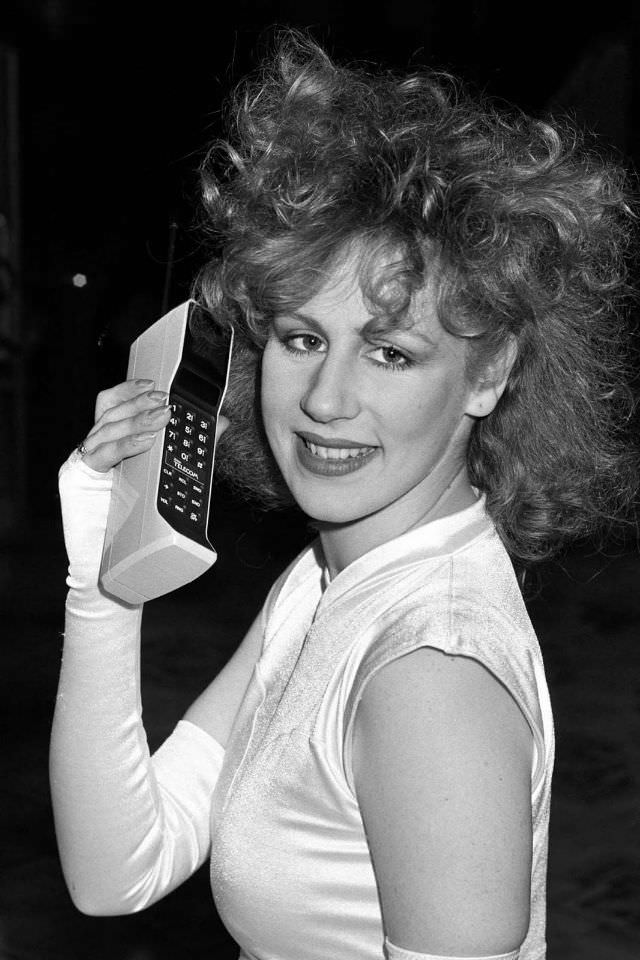
London in 1985 was learning to imagine a life untethered from phone boxes, and the Cellnet cellular radio system launch sold that promise with a mix of glamour and engineering. Here, a model holds an early mobile handset to her ear, smiling as if the future has already arrived. The stark lighting and confident pose give the moment the polished feel of a press event designed to make new technology look effortless.
The handset itself tells the real story: large, angular, and unmistakably built for function before fashion, with a prominent keypad and a form that dwarfs today’s slim smartphones. Seen beside carefully styled hair and evening-ready attire, the device reads as both luxury object and technical marvel—something to be shown off as much as used. That contrast captures the mid-1980s turning point when mobile communication began shifting from specialist equipment to aspirational consumer product.
For readers interested in the history of mobile phones, cellular networks, and British telecommunications, this photo offers a vivid snapshot of early adoption culture. It hints at the marketing language of the era—mobility, status, modernity—while quietly reminding us how quickly design and expectations evolve. What looks bulky now once stood at the cutting edge, marking the start of a transformation that would reshape daily life, business, and social connection.