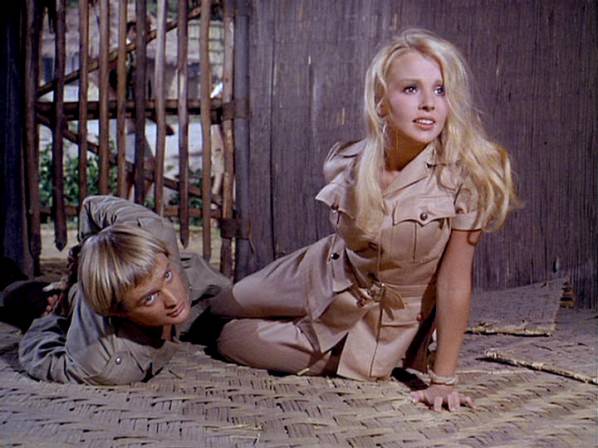
A tense, staged moment from *The Man from U.N.C.L.E.* places Joyce Jillson at the center of the frame, her blonde hair and tan, belted outfit catching the light as she braces herself on a woven mat floor. Beside her, a man lies low, half-turned toward the camera, suggesting a sudden ambush or a hurried attempt to stay out of sight. Behind them, rough wooden walls and upright bars create a makeshift, almost cage-like backdrop that instantly signals danger and confinement.
Even without dialogue, the image leans hard into the mid-century spy aesthetic the series is famous for—glamour under pressure, exoticized set dressing, and action staged in tight quarters. Jillson’s alert gaze off-frame does most of the storytelling, implying an unseen threat just outside the shot. The earthy tones and practical costuming hint at a jungle-adventure detour from the show’s usual sleek espionage, a tonal shift that often divided audiences.
The post title’s nod to “one of the most widely panned episodes” adds an intriguing layer: sometimes the installments fans love to critique are the ones that best reveal a show’s risks, trends, and limitations. Whether you come for Joyce Jillson’s screen presence, the period production design, or the broader history of 1960s television spy dramas, this still offers plenty to examine. It’s a compact snapshot of how *The Man from U.N.C.L.E.* tried to balance pulp thrills with prime-time style—and how that balancing act didn’t always land.