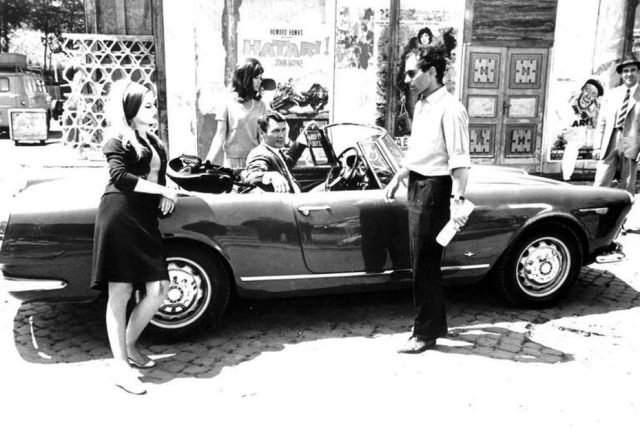
Sunlight spills across a cobbled street as a sleek convertible becomes the stage for an uneasy pause: a woman leans with poised confidence against the car’s flank, while a man stands nearby with papers in hand, mid-thought, mid-argument. Another figure settles behind the wheel, watching the exchange, and a passerby hovers at the edge of the frame—small details that make the moment feel lifted from real life. The composition hints at the seductive surfaces and simmering tensions that define Jean-Luc Godard’s *Le Mépris* (1963), where glamour rarely arrives without a shadow.
Posters and shopfront textures in the background pull the viewer into a lively Mediterranean street atmosphere, yet the people in front seem locked in a private drama. Angled bodies and averted gazes suggest miscommunication: attraction turning brittle, admiration curdling into contempt, affection negotiating with ego. It’s the kind of still that speaks in half-sentences—perfect for a story about cinema itself, and about the emotional negotiations behind the scenes of love and filmmaking.
For readers searching for *Le Mépris* (Contempt), Brigitte Bardot’s presence, or Godard’s New Wave sensibility, this historical photo offers a vivid entry point into the film’s world of style, power, and vulnerability. The convertible, the casual elegance, and the street’s everyday bustle echo the movie’s collision of art and commerce, intimacy and performance. Seen today, the image feels like an invitation to look harder—behind the famous gaze, past the polished exterior, and into the complicated human currents that Godard put on screen.