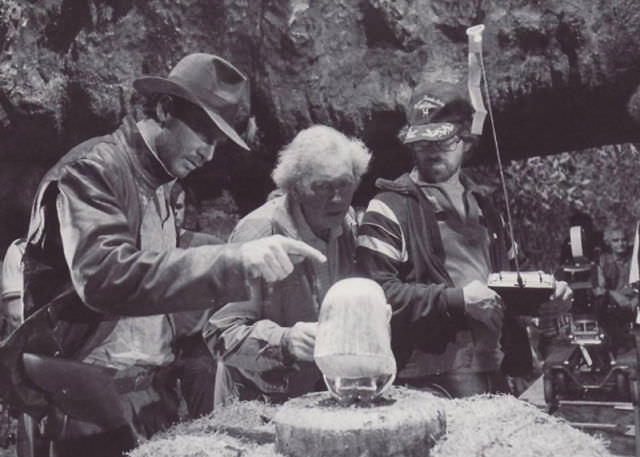
Leather jacket and fedora in place, the actor playing Ford leans in and points with the confidence of an adventurer—yet the mood here is pure workshop. Beside him, cinematographer Douglas Slocombe and director Steven Spielberg focus on a small idol prop set on a rough pedestal, treating it less like treasure and more like delicate machinery. The title’s mention of an “animatronic idol” fits the scene perfectly: a classic movie moment being engineered by hands and eyes just outside the frame of the story.
Behind-the-scenes photos like this pull back the curtain on how iconic action filmmaking is built from collaboration and careful problem-solving. Cables, a rig, and nearby crew hint at the technical choreography required to make a small object feel alive and consequential on screen. Slocombe’s presence underscores how lighting and camera placement shape the mythic atmosphere, while Spielberg’s attention suggests the director’s role as both storyteller and practical tinkerer.
For fans of film history, practical effects, and classic adventure cinema, this is a vivid reminder of an era when props and animatronics did the heavy lifting long before digital polish became routine. The composition balances personality and process: performers and filmmakers shoulder-to-shoulder, testing, adjusting, and refining a single detail that audiences might only glimpse for seconds. It’s an SEO-friendly snapshot of movie magic—Indiana Jones-era craftsmanship, on-set teamwork, and the tactile artistry that still influences filmmakers today.