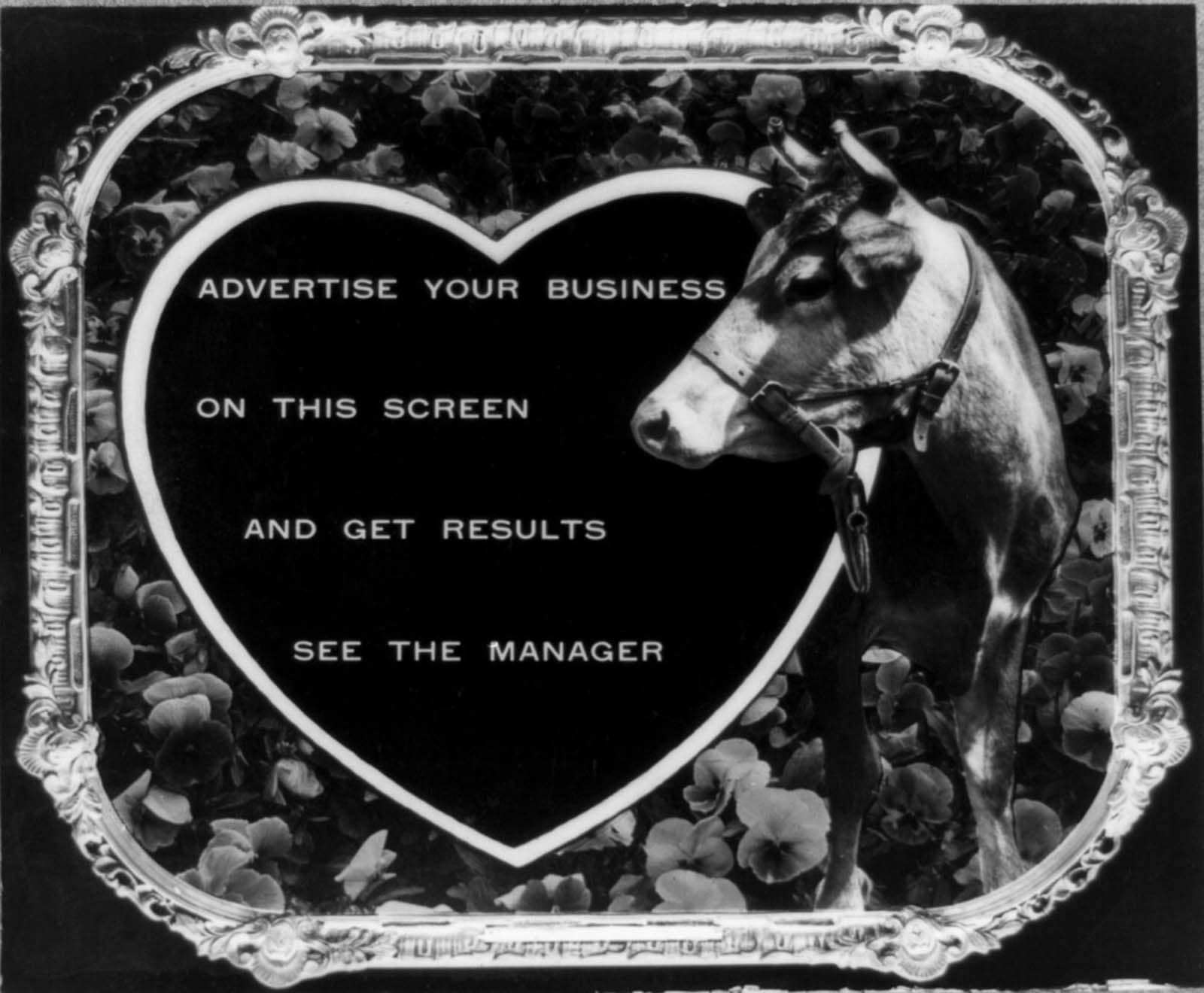
Across an ornate, floral border, a heart-shaped panel delivers a blunt pitch in block letters: “ADVERTISE YOUR BUSINESS ON THIS SCREEN AND GET RESULTS — SEE THE MANAGER.” To the right, a saddled donkey stands like an unexpected mascot, its calm presence contrasting with the hard-sell copy. The design feels part vaudeville flourish, part storefront practicality—an advertisement for advertising, dressed up to look like entertainment.
Theater owners and managers didn’t just sell tickets; they sold attention. Before a feature began, screens could carry short promotional slides that local merchants paid to place, turning the cinema into a community bulletin board with a captive audience. The message here is as direct as any modern media kit, promising measurable “results” and nudging business owners toward a conversation with the person in charge.
Details like the decorative frame and playful animal suggest how carefully these promotional posters tried to charm their viewers while making a business proposition. For anyone interested in movie history, cinema advertising, and the early relationship between small-town commerce and the silver screen, this image is a compact lesson in how theaters marketed their value beyond films. It also hints at the social role of the local cinema—part showplace, part sales floor, and very much a hub of everyday life.