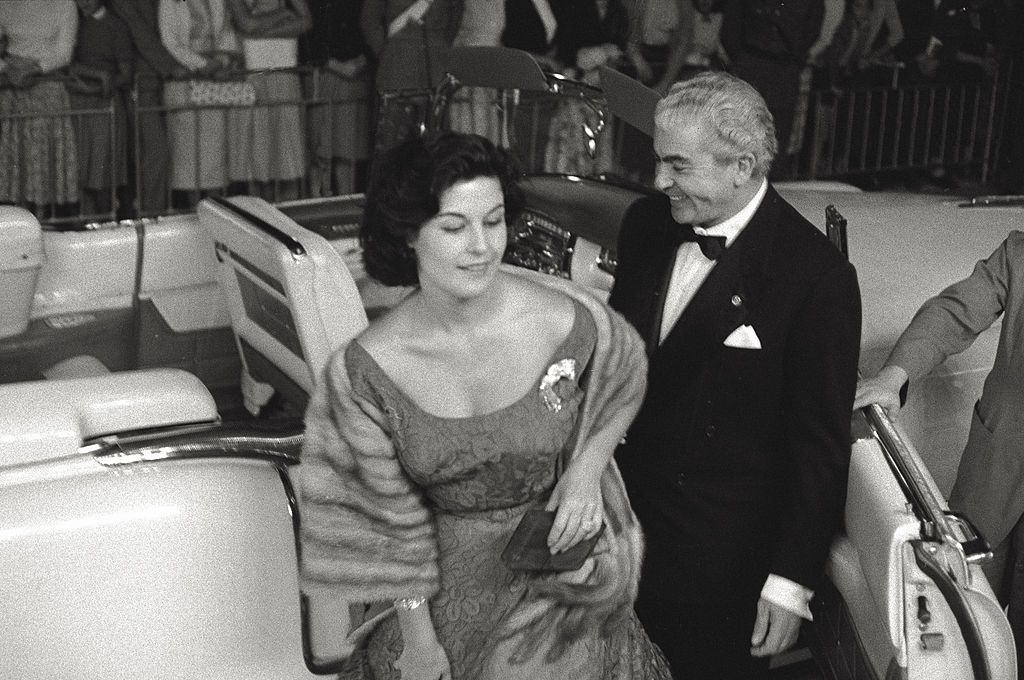
Velvet-like glamour hangs in the air as a poised woman steps out of a long, polished limousine, her elegant robe draped over a formal gown and gathered at the shoulders like a stage curtain. The open car door frames the moment, catching the soft sheen of fabric, the sparkle of a brooch, and the careful choreography of an arrival meant to be seen. Behind the vehicle, spectators cluster along barriers, their blurred faces and raised attention hinting at the excitement that surrounds a major film festival entrance.
Nearby, a sharply dressed gentleman in a tuxedo—white pocket square, bow tie, and a warm, approving smile—adds to the sense of ceremony, as if he’s ushering the evening forward. The scene feels both intimate and public: a quick glance downward, a steadying hand on the door, the robe’s heavy folds settling into place. Details like the convertible’s clean lines and the crowd’s press-line posture speak to mid-century red-carpet culture, where cinema, fashion, and status converged in a few seconds of flashbulb time.
Set during the 17th Venice International Film Festival, the photograph evokes the festival’s storied blend of artistry and spectacle, when premieres doubled as social theatre and every arrival became part of the narrative. It’s a rich snapshot for readers interested in classic film history, vintage couture, and the traditions of European movie festivals—limousines, formalwear, and that unmistakable anticipation before the lights go down. Even without names attached, the image preserves the language of celebrity: elegance in motion, witnessed by a waiting crowd and immortalized in a single, glamorous instant.