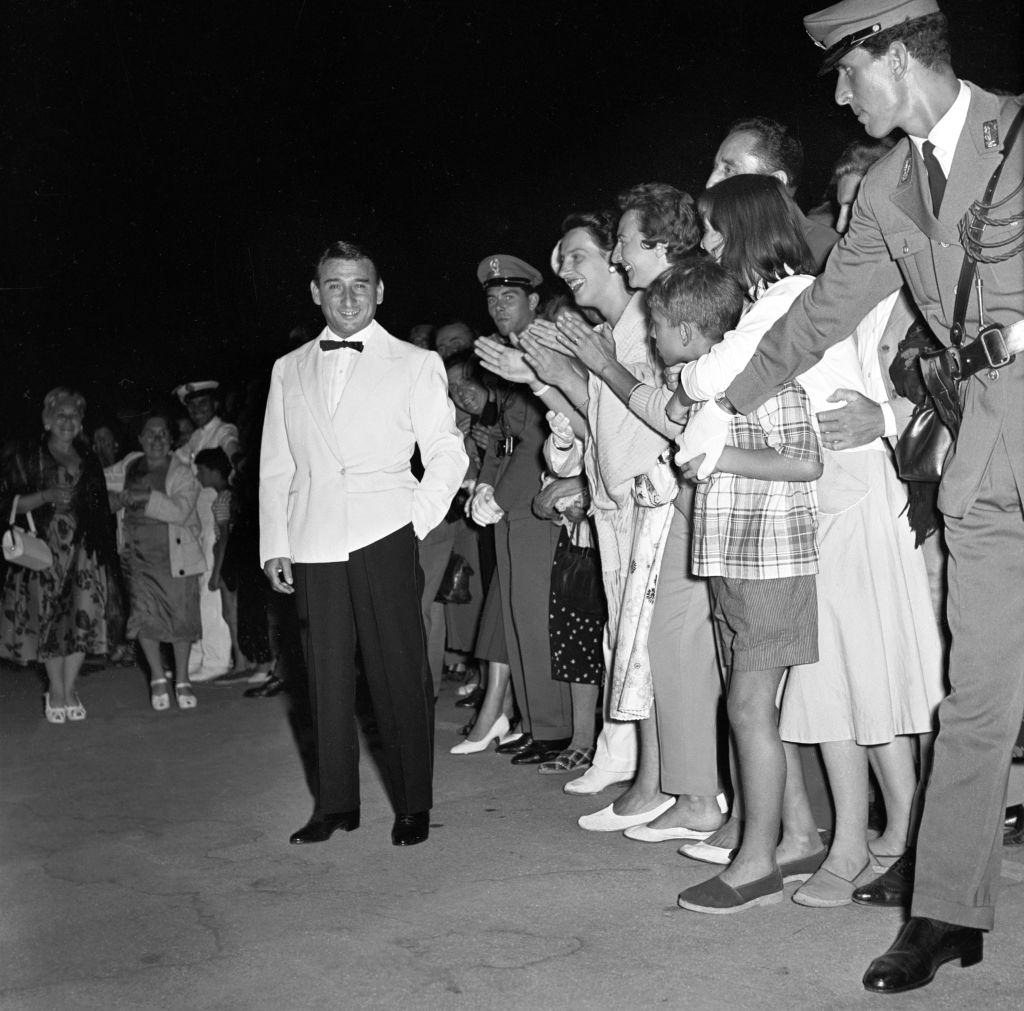
Renato Rascel, born Renato Ranucci, arrives with an easy confidence that reads instantly on camera—smiling, impeccably dressed in a light dinner jacket and bow tie, and stepping into the glow of festival attention. The night setting and open space in front of him create a stage-like moment, turning a simple walk into a small performance worthy of the cinema world he represented. In the background, faces blur into a lively backdrop, reinforcing the sense that something celebrated is underway.
Along the right edge, a tightly packed line of admirers leans forward, hands mid-applause, eager for a closer look at the Italian actor as he passes. A uniformed presence holds the boundary, suggesting the careful choreography of a major public event where celebrities, crowds, and protocol all meet. Details like summer clothing, casual shoes, and the mix of ages in the audience add texture—this isn’t an elite gathering sealed off from the city, but a festival atmosphere shared with ordinary people.
Venice in 1956 sits behind this scene as more than a caption; it’s the cultural weather of the postwar era, when film festivals helped define taste, glamour, and international conversation. For readers interested in classic cinema, Italian film history, and the enduring ritual of red-carpet arrivals, this photograph offers a vivid slice of mid-century festival life. It’s a reminder that screen legends were also public figures encountered in real streets, greeted by real voices, under the bright scrutiny of photographers’ flashes.