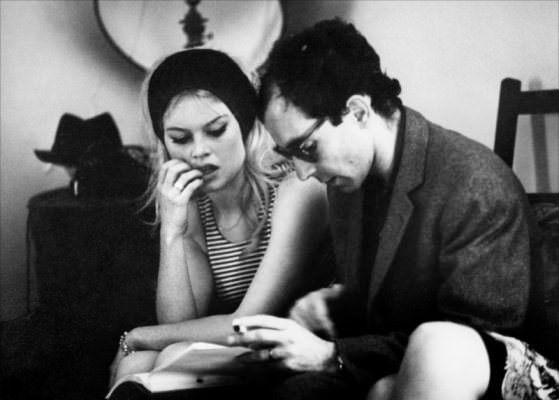
Bardot sits close in a striped top, her hand at her mouth as if weighing an unspoken reply, while a bespectacled man beside her bends over a small object in his hands, absorbed and distant. The tight interior framing and soft grain of the still lend it a lived-in, behind-the-scenes intimacy—part domestic pause, part professional preoccupation. Even without dialogue, the body language sketches a relationship caught between attention and avoidance, a theme that Le Mépris (1963) makes painfully articulate.
Godard’s cinema often turns ordinary gestures into psychological battlegrounds, and this candid moment echoes that method: proximity without connection, shared space without shared focus. The photo’s understated set dressing and modest seating keep the emphasis on faces, hands, and the uneasy rhythm of waiting. For readers searching for Jean-Luc Godard, Le Mépris, or Brigitte Bardot on film, it’s a striking reminder that the French New Wave could make emotional fractures visible through nothing more than posture and silence.
Behind Bardot’s gaze lies a story about love curdling into contempt, and about cinema itself—scripts, negotiations, and the uneasy dance between art and commerce. The still invites you to look past glamour and into the mechanics of feeling: who speaks, who listens, and who withdraws into thought. As a WordPress feature image for classic film lovers, it sets the tone for an exploration of Le Mépris as both a relationship drama and a meditation on filmmaking’s power to reveal, distort, and estrange.