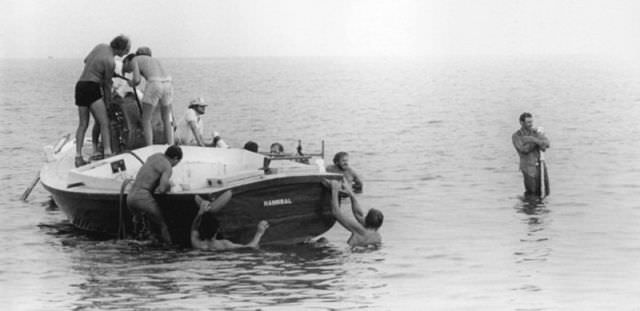
A small motorboat sits low in calm water while a cluster of crew and performers crowd the deck, leaning over the side as if steadying the craft between takes. In the foreground, several swimmers tread water and cling to the hull, turning the sea itself into part of the set. Farther off, a lone figure stands chest-deep, watching the action with the patient stillness that feels unmistakably like a film shoot paused mid-problem-solving.
The post title points to one of cinema’s most-debated transitions—the infamous “submarine trip”—and the scene here reads like a practical answer imagined in human, physical terms. Rather than relying on a cut and a leap of faith, the moment suggests logistics: how a hero might survive by slipping into the water, catching a ride, or enduring a long drift while the machines of the story move overhead. It’s a reminder that adventure filmmaking often depends less on impossible stunts than on clever staging, careful coordination, and a lot of wet work.
Deleted scenes like this are historical artifacts in their own right, preserving the behind-the-scenes craft that never made the final edit. The mixture of bodies in the water, hands on the boat, and eyes fixed on the next move evokes the collaborative choreography that builds a believable escape. For fans searching for “Indy submarine scene deleted” or “how Indy survived the submarine trip,” the photo offers a tantalizing glimpse of the practical thinking that once bridged a narrative gap—before the cutting room made it a mystery again.