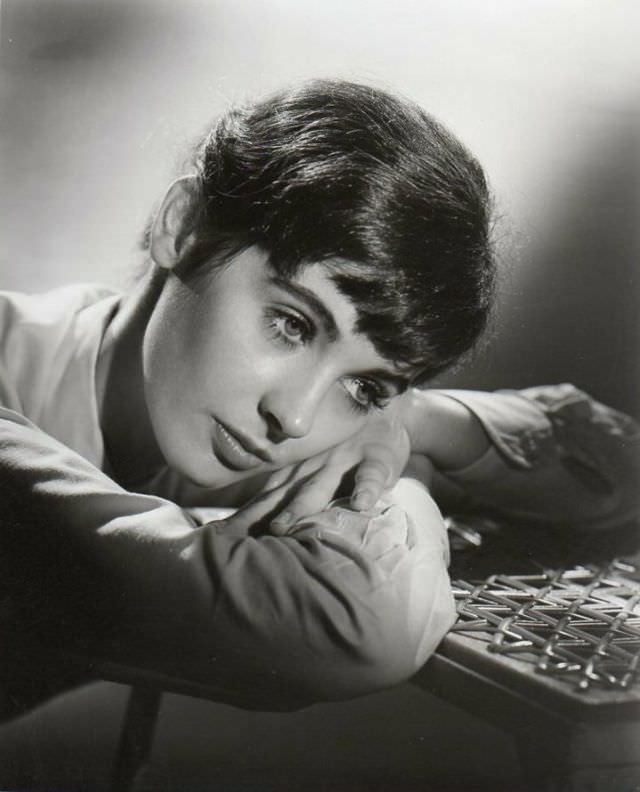
Soft studio light falls across a young actress’s face as she rests her head on folded arms, eyes turned slightly away in a quiet, inward moment. The close framing and gentle shadows evoke the intimacy of a private thought, the kind of stillness that cinema can hold for only a breath. In this production image tied to the filming of *The Diary of Anne Frank (1959)*, Millie Perkins appears poised between performance and contemplation.
Her simple blouse, natural styling, and unguarded expression lean into the film’s restrained realism, suggesting the emotional weight required to portray Anne Frank on screen. The textured surface beside her—part table, part set dressing—adds a tactile note, reminding viewers that this is both a crafted movie scene and a record of work happening just outside the frame. It’s a portrait that invites attention not to spectacle, but to feeling.
For readers interested in classic Movies & TV history, this photograph offers a compelling glimpse into mid-century filmmaking and the careful visual language used to adapt a world-famous diary. Beyond its aesthetic appeal, it highlights how screen performances are built from small, human gestures captured between takes or staged to feel like life. As a WordPress post feature, it’s a strong piece for searches around Millie Perkins, *The Diary of Anne Frank* film imagery, and behind-the-scenes Hollywood photography.