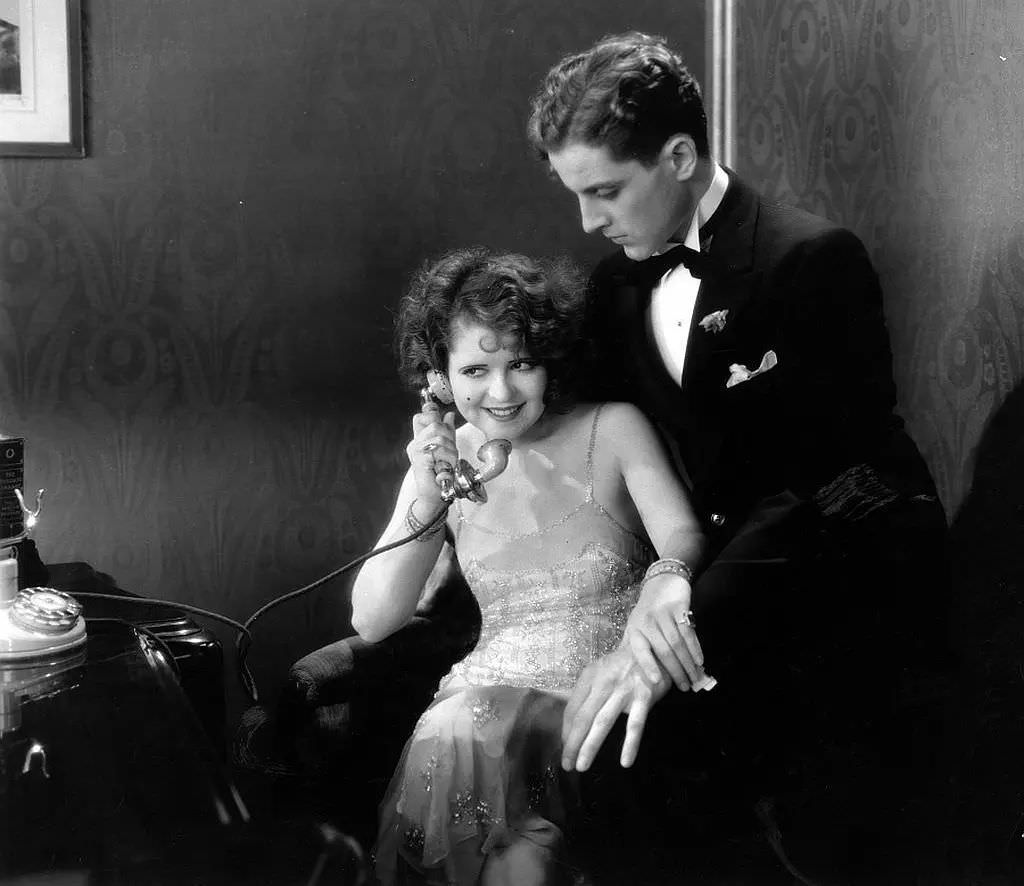
Clara Bow lounges in a shimmering evening dress with a telephone receiver pressed to her ear, her smile suggesting mischief as much as confidence. Behind her, Phillips Holmes leans in with a watchful, almost guarded intensity, dressed in a sharp tuxedo that frames the scene’s hush. The contrast between her playful expression and his composed posture gives the still a sense of plot—something has just been said, or is about to be overheard.
Set dressing does a lot of work here: patterned wallpaper, a small framed picture on the wall, and a desk crowded with period equipment and the hefty base of the phone. The close quarters and soft lighting create an intimate, backstage feel, like a private corner carved out of a louder night. Details like Bow’s curled bob, sparkling fabric, and the cigarette poised in her hand place the moment firmly in late-1920s screen glamour.
As a promotional-style image tied to The Wild Party (1929), the photo speaks to the era when Hollywood sold romance, risk, and modernity in a single frame. It’s a useful snapshot for classic film fans searching for Clara Bow photos, Phillips Holmes portraits, or early talkie-era publicity stills, where fashion and attitude are as important as narrative. Even without dialogue, the composition captures the film’s charged mood—flirtation on the line, and consequences close enough to touch.