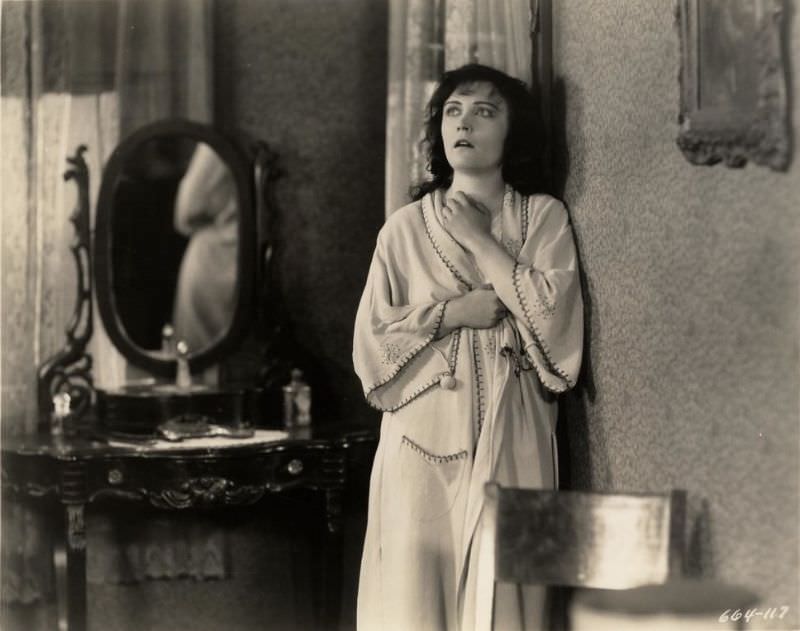
A hush hangs over this still from *The Secret Hour (1928)*, where a young woman in a belted robe presses herself to the wall as if listening for footsteps beyond the frame. Her wide-eyed expression and protective posture turn a simple interior into a stage for suspense, suggesting secrets traded in whispers rather than shouted in dialogue. The composition leans into silent-era storytelling, letting gesture and light carry the emotional weight.
Behind her, a vanity with an oval mirror and scattered toiletry bottles hints at privacy interrupted—an intimate room suddenly made uncertain. The mirror’s dark reflection and the soft drapery create depth while keeping the atmosphere claustrophobic, reinforcing the title’s promise of hidden moments and late-night revelations. Details like embroidered cuffs and the ornate furniture add period texture that movie-history fans and classic cinema readers will recognize.
For collectors of silent film memorabilia and early Hollywood photography, images like this serve as miniature lessons in mood, performance, and set design. *The Secret Hour* stands in that fascinating transition toward the talkies, when filmmakers refined visual drama to its sharpest point. Whether you’re exploring 1920s Movies & TV or curating a vintage film blog, this scene invites a closer look at how “iconic” was built—one tense glance, one shadowed corner, one secret hour at a time.