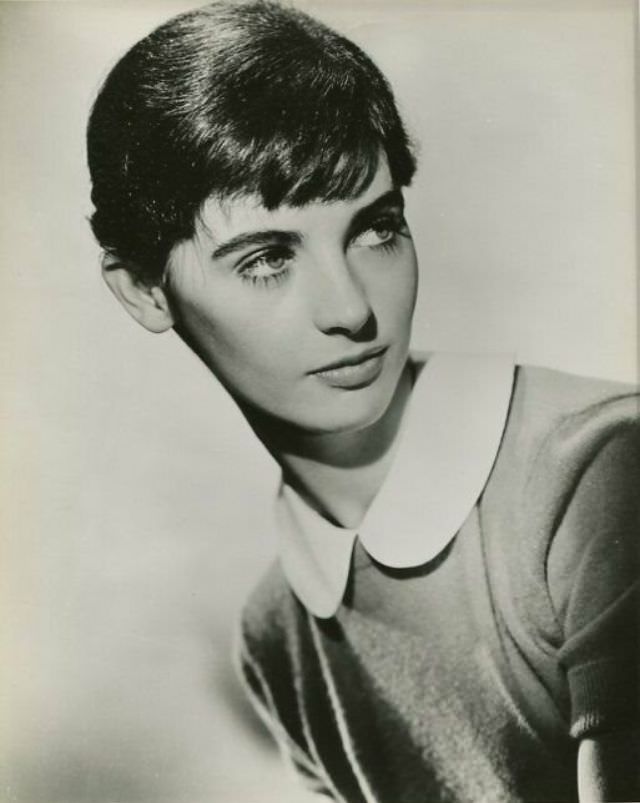
Millie Perkins appears in a quiet, thoughtfully posed portrait taken during the production of *The Diary of Anne Frank (1959)*, her gaze turned slightly away as if listening for something just out of frame. The soft lighting and close crop emphasize youthful features and expressive eyes, while the simple costume—most notably the crisp white collar—suggests the carefully controlled period look that filmmakers used to ground audiences in Anne Frank’s world.
There’s a striking contrast here between the calm of a studio image and the emotional weight carried by the role it represents. Perkins’ restrained expression feels deliberate, capturing a sense of inward life rather than theatrical display, and that choice mirrors why the story has endured: Anne Frank’s voice remains intimate, observant, and intensely human. Even without a visible set, the photo reads as a behind-the-scenes glimpse into how classic Movies & TV sought authenticity through performance, wardrobe, and mood.
For collectors of Hollywood history and readers interested in adaptations of Anne Frank’s diary, this production still serves as a major cultural reference point. The photograph works well as an archival entry for searches related to Millie Perkins, *The Diary of Anne Frank* film, and 1950s cinema, offering a timeless look at the actress in character during a landmark screen interpretation. In its simplicity, it invites viewers to pause—much like the diary itself—and consider what it means to translate memory into film.