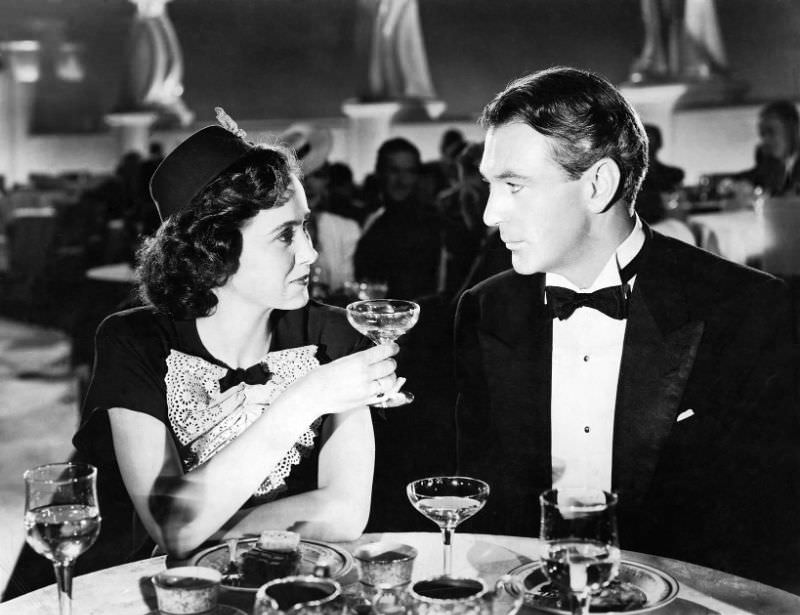
Across a softly lit nightclub table, a tuxedoed man leans in to listen while his companion lifts a coupe glass mid-thought, the kind of intimate moment classic Hollywood loved to linger on. The shallow depth and glowing highlights place the viewer right in the conversation, with blurred patrons and curved architectural details suggesting a lively room beyond the frame. It’s an elegant slice of 1940s screen atmosphere—romance, wit, and understatement distilled into a single exchange.
Seen through the lens of the post’s theme, the scene echoes what made *The Pride of the Yankees* (1942) so enduring: a biographical sports drama that treats fame as something carried in quiet, human moments, not just in stadium lights. Gary Cooper’s star persona—composed, sincere, and slightly reserved—fits neatly into this kind of setting, where character is revealed by pauses, glances, and the gentle choreography of a shared drink. Even without a baseball diamond in view, the mood aligns with the film’s approach to Lou Gehrig’s story as lived experience, shaped by love, duty, and the public gaze.
For readers searching Movies & TV history, this photo complements discussions of classic cinema, wartime-era storytelling, and the craftsmanship of studio-era cinematography. The formal wear, glassware, and table setting evoke a world of set design and costuming that helped biopics feel both glamorous and grounded, balancing spectacle with tenderness. As part of “Lou Gehrig’s Story Through Gary Cooper’s Eyes,” it invites a closer look at how Hollywood translated a sports legend into a universally recognizable narrative of perseverance and heart.