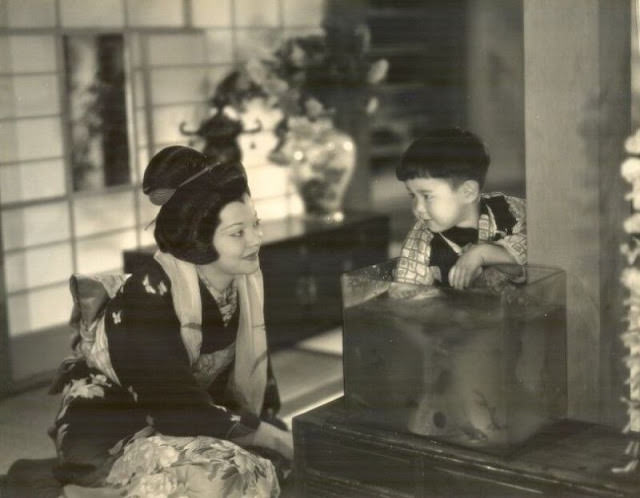
Sylvia Sidney appears in character with a carefully arranged coiffure and patterned robe, leaning in with a calm, attentive expression that suggests tenderness rather than theatrical flourish. The intimate staging—low to the floor, bodies angled toward one another—draws the eye to a quiet exchange instead of spectacle, a reminder of how early sound-era films often relied on small gestures to carry big emotions. Even without dialogue, the scene communicates the kind of poised vulnerability audiences associate with the screen’s most memorable dramatic performances.
Across from her, a child perches on a raised step, watching her closely, turning the moment into a study of trust and expectation. The set dressing hints at a Japanese-inspired interior—panel-like screens, a vase of flowers, and a sparse, ordered space—evoking the visual language Hollywood frequently used when adapting “Madame Butterfly” for the movies. These details, along with the soft lighting and measured composition, create an atmosphere that feels domestic and fragile, as if the story’s heart is unfolding in a single room.
For readers exploring classic Hollywood, this still serves as an evocative gateway into “Madame Butterfly” (1932) and the way film and television history has revisited the tale. It invites a closer look at performance style, costume, and production design in early 1930s cinema, when studios sought to translate stage-born tragedy into intimate screen drama. Whether you arrive here searching for Sylvia Sidney, vintage movie photos, or the enduring legacy of “Madame Butterfly,” the image offers a poignant snapshot of storytelling built from expression, posture, and carefully chosen surroundings.